
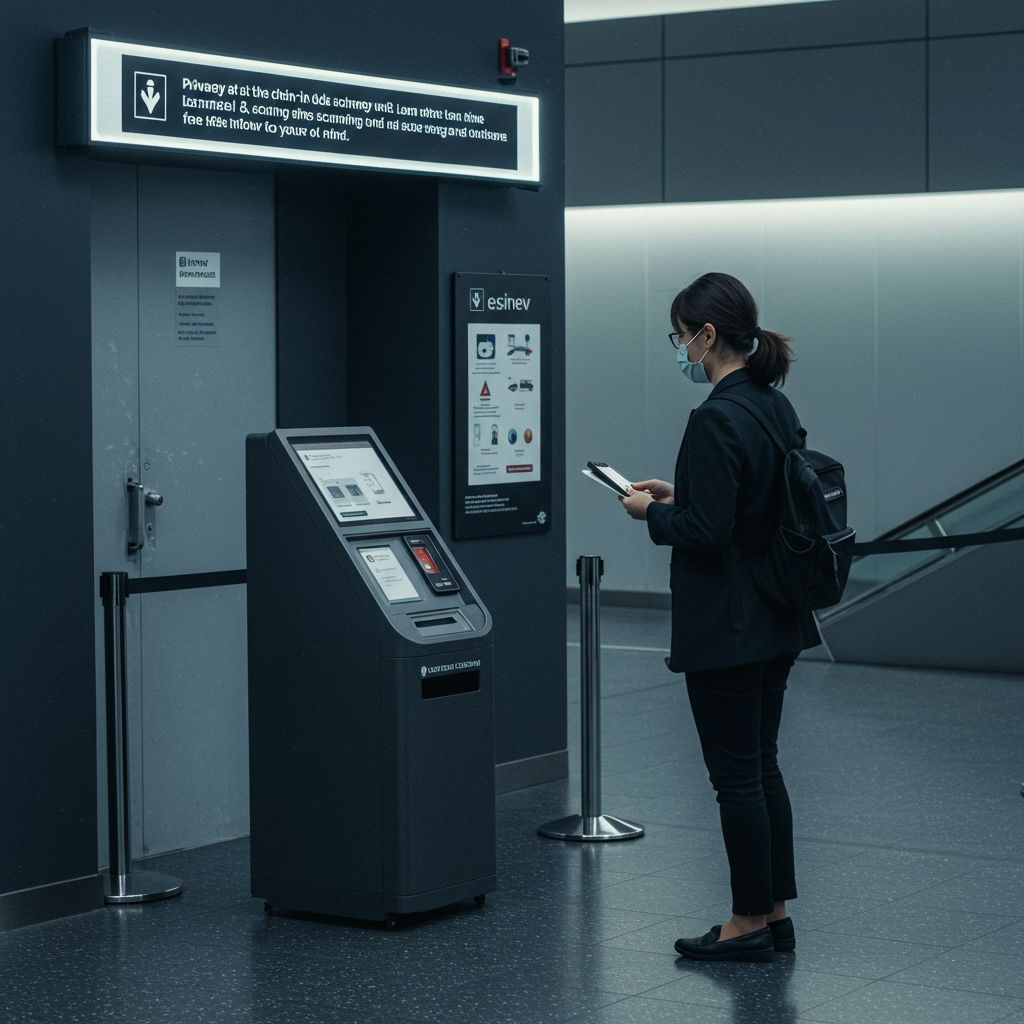
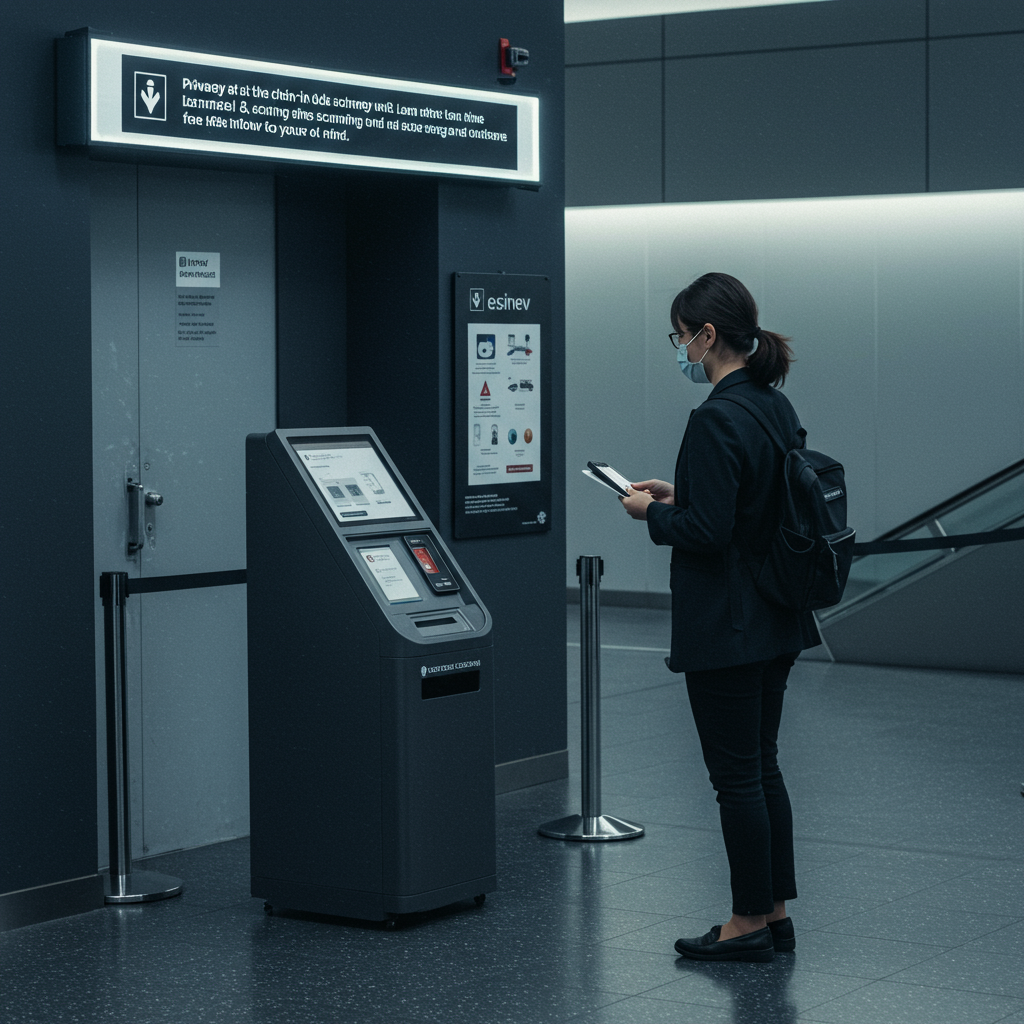
Data Privacy Guide at Check-in: Verification, Scanning, and Secure Document Storage
This article offers a comprehensive guide for hotel managers, reception staff, and compliance officers on how to implement guest registration processes that ensure maximum data protection. We cover everything from the legal basis for requesting identity documents to best practices for scanning, temporary storage, and secure destruction. The goal is to transform regulatory compliance, such as GDPR, into a competitive advantage that increases customer confidence. Key KPIs are detailed, such as the reduction in check-in time (up to 15%), the improvement of the Net Promoter Score (NPS) by +5 points, and the elimination of penalty risks, demonstrating that robust data privacy management at check-in is fundamental to the reputation and profitability of the hotel sector.
Introduction
A hotel reception desk is much more than just a welcome point; it is one of the main interfaces for collecting sensitive personal data. Every day, identity documents, credit cards, and personal preferences are processed, making the check-in process a critical moment for information security. Inadequate management at this point not only exposes the guest to the risks of fraud or identity theft but also subjects the establishment to severe financial penalties and irreparable reputational damage. Therefore, optimizing data privacy at check-in is not an option, but a strategic necessity. This proactive approach goes beyond mere compliance with regulations such as the General Data Protection Regulation (GDPR) in Europe; it becomes a fundamental pillar for building trust and loyalty with the modern customer, who is increasingly aware of the value of their privacy.
In this guide, we will break down a comprehensive methodology for auditing, redesigning, and implementing secure and efficient check-in processes. We will analyze the legal bases that justify data collection, the scanning technologies that respect the principle of data minimization, and the storage and destruction policies that guarantee confidentiality. We will measure the success of these implementations through specific Key Performance Indicators (KPIs), such as reducing the deviation in regulatory compliance to less than 2%, decreasing the average check-in process time by 20%, and increasing guest satisfaction (measured through NPS) regarding the management of their personal information.
Vision, values, and proposal
Focus on results and measurement
Our vision is to transform privacy management from a legal obligation into a strategic asset that generates tangible value. We believe that trust is the new currency in the hotel industry. We adopt the Pareto principle (80/20) to prioritize our efforts: we focus on the 20% of data processes (check-in, payment management, storage of ID copies) that carry 80% of the risk. Our values are based on transparency, security by design, and continuous improvement. We promote adherence to international standards such as ISO/IEC 27001 for Information Security Management Systems, ensuring that the implemented policies are not mere documents, but living, auditable and efficient operational practices. The value proposition is clear: reduce risk to zero, optimize operations, and improve the guest experience.
- Core Value: Guest Trust. A guest who perceives their data as secure is more likely to return and recommend the property (increasing Lifetime Value by 10-15%).
- Quality Criterion: Proactive Compliance. We don’t just react to the law; we anticipate customer expectations and future regulations, ensuring a leading position.
- Technology Decision Matrix:
- Security: Does it use end-to-end encryption and comply with PCI DSS?
- Efficiency: Does it reduce check-in time and minimize manual errors?
- Compliance: Does it facilitate the Data minimization and retention period management?
- Cost-Benefit: Does the ROI, measured in time savings and risk reduction, justify the investment?
Services, profiles, and performance
Portfolio and professional profiles
We offer a portfolio of services designed to address every facet of data privacy at check-in. These services are performed by a multidisciplinary team that includes certified Data Protection Officers (DPOs), cybersecurity consultants with experience in the hotel sector, and trainers specializing in reception processes.
Check-in Process Audit (Gap Analysis): A DPO and a process analyst map the current guest data flow, from booking to post-checkout. Compliance gaps with GDPR/LOPDGDD and security vulnerabilities are identified. KPIs: 100% identification of risk points, report delivery within 2 weeks.
Design and Implementation of Secure Protocols: The process is redesigned to incorporate privacy-by-default principles. This includes selecting scanning software that does not store images, configuring PMS systems for pseudonymization, and drafting clear information clauses. KPIs: 90% reduction in unnecessary data collected, 15% improvement in check-in time.
- Staff Training and Awareness: Hands-on training programs for the reception team on how to handle sensitive data, detect social engineering attempts, and respond to guest rights requests. KPIs: 95% pass rate in post-training tests, 80% reduction in human error.
- Outsourced DPO Service: Ongoing advice, security breach management, and representation before the supervisory authority. KPIs: Response time to inquiries < 24 hours, breach management according to legal deadlines.
Tables and examples
Implement a “clean desk” policy and use certified paper shredders.Data at rest is protected against unauthorized access, both physical and digital.Ensure data deletion.100% automatic deletion rate of registration data after 12 months (or the applicable legal period).Program automatic scripts in the PMS to delete guest records once the legal retention period has ended.Comply with the right to be forgotten and retention periods, minimizing the attack surface.Improve transparency with guests.+5 point increase in NPS on the question about “Trust in the management of my data.”
| Objective | Key Indicators (KPIs) | Specific Actions | Expected Result | |
|---|---|---|---|---|
| Minimize the collection of ID card data | 95% reduction in stored photocopies/full scans | Implement OCR scanning software that only extracts legally required data (name, ID number, date of birth) without saving the image. | Compliance with the principle of minimization and drastic reduction of the risk of sensitive data leakage. | |
| Secure temporary storage | AES-256 encryption in all digital repositories; 0 uncontrolled physical copies | Configure encryption in the PMS database. | Redesign the registration form and information signs at reception to clearly and simply explain why data is requested and how it is protected. | Greater customer trust and satisfaction, resulting in a better reputation and increased customer loyalty. |

Representation, Campaigns, and/or Production
Professional Development and Management
Implementing a new privacy protocol is a project that requires meticulous management, similar to a production. Coordination between departments (Reception, IT, Legal, Marketing) is crucial. The process is planned with a clear schedule, assigning responsibilities and establishing milestones. Logistics include acquiring hardware (secure scanners) and software (PMS updates), as well as obtaining licenses. Supplier management is key: we select those who demonstrate a clear commitment to security and offer robust Service Level Agreements (SLAs) regarding data protection.
- Legal Documentation Checklist:
- Updated Record of Processing Activities (ROPA).
- Data Protection Impact Assessment (DPIA) if applicable.
- Data processing agreements (Art. 28 GDPR) with suppliers (PMS, booking engine).
- Revised legal texts: privacy policy, information clauses at check-in.
- Contingency Plan:
- OCR Scanner Failure: Manual procedure for collecting minimal data, with immediate destruction of the physical media after the Digitization.
- PMS System Outage: Offline registration protocol using pre-printed forms with a privacy clause, stored in a locked filing cabinet until system restoration.
- Security Incident (Data Breach): Response plan with defined roles (DPO, IT, Management) for notification to the supervisory authority and affected parties within 72 hours.
-

A planned workflow with a Gantt chart ensures a smooth transition, minimizing service disruption at reception and guaranteeing that all risks are mitigated in a timely manner.
Content and/or Media that Convert
Messages, Formats, and Conversions
Communication is fundamental for the investment in privacy to translate into trust. “Content that converts” not only sells rooms but also sells security and peace of mind. The key message should be simple: “We care about your privacy as much as your comfort.” This message should be consistent across all touchpoints. At the front desk, a brochure or digital sign can explain in three points why ID is requested, assuring guests that their information is handled with the utmost care. Implementing a content strategy focused on data privacy at check-in can improve the conversion rate of direct bookings, as customers perceive a higher level of professionalism and security.
- Phase 1: Current Content Audit. All existing texts (website, confirmation emails, forms) are reviewed to ensure the language is clear and complies with GDPR information requirements.
- Phase 2: Material Creation.
-
- Responsible: DPO and Marketing Director.
- Tasks: Drafting a new, human-readable Privacy Policy. Designing infographics for the reception area. Creation of a short explanatory video for the lobby screens.Phase 3: A/B Testing. Two versions of the pre-check-in email are tested: one highlighting the commitment to privacy and one without. The open rate and the percentage of guests who complete the online pre-check-in are measured. KPI: 10% increase in online pre-check-in completion.
Phase 4: Deployment and Measurement. The winning materials are implemented, and customer feedback is monitored through post-stay surveys, looking for specific mentions of security and privacy. KPI: Improvement of sentiment in online reviews related to data management.

A multichannel communication strategy ensures that the message of trust and security reaches the guest at the right time, strengthening the relationship and business objectives. -
Training and employability
Demand-driven catalog
Reception staff are the first line of defense for privacy. Proper training is not an expense, but an essential investment to mitigate the main risk vector: human error. Our training programs are designed to be practical, relevant, and geared towards the real-life situations the team faces every day.
Module 1: Fundamentals of Data Protection in the Hospitality Industry (4 hours). Key concepts of the GDPR (personal data, legal basis for processing, ARSULIPO rights) applied to the hotel context. The legal basis for requesting ID is explained (compliance with traveler registration regulations).
Module 2: Secure Check-in and Check-out Protocol (6 hours). Practical simulation of the new process. Using OCR scanning software, what to say and what not to say to the customer, how to handle physical documents securely, and how to proceed during checkout to confirm the deletion of unnecessary data.
Module 3: Request and Crisis Management (4 hours). Role-playing for managing guest rights requests (e.g., “I want a copy of all my data”). Protocol for responding to a potential security incident (e.g., a guest reports receiving a phishing email that appears to be from the hotel).
Module 4: Cybersecurity for Non-Technical Staff (2 hours). How to identify phishing emails, the importance of strong passwords for PMS access, and corporate device usage policies.
Methodology
The methodology is eminently practical (“learning by doing”). The evaluation is carried out using rubrics that measure the correct application of the protocols in simulations. At the end of the training, employees receive an internal certification that can be a plus in their professional development. It is expected that, after the training, 98% of the staff will be able to clearly explain the hotel’s privacy policy to a guest and execute the check-in process without deviations from the protocol. This not only improves security but also increases staff employability by providing them with highly sought-after digital and legal skills.
Operational Processes and Quality Standards
From Request to Execution
A standardized and audited operational process is the backbone of effective privacy management. Our guest data lifecycle model ensures control at every stage.
Diagnosis (1 week): A gap analysis is performed. The deliverable is a detailed report with a risk map and a list of non-conformities. Acceptance criteria: the report must be validated by the DPO and hotel management.
Proposal and Design (2 weeks): An action plan with technological and procedural solutions is presented. Deliverable: Privacy Procedures Manual and IT technical specifications. Acceptance criteria: the plan must have a positive projected ROI and be operationally feasible.
Pre-production (4 weeks): Implementation phase. Software configuration, preparation of training materials, and drafting of legal texts. Deliverable: Functional test environment. Acceptance criteria: Successful completion of a basic penetration test and a pilot test with a small group of staff.
Implementation and Training (2 weeks): Deployment of the new process throughout reception and intensive training for all involved staff. Deliverable: Trained and certified staff. Acceptance criteria: 95% success rate in post-training evaluations.
Closure and Monitoring (ongoing): Project handover and start of the ongoing audit and support phase. Deliverable: First monthly compliance report. Acceptance Criteria: The defined KPIs (check-in time, NPS) show a positive trend in the first month.
Quality Control
Roles: The DPO is responsible for oversight, the Head of Reception is responsible for daily execution, and the Hotel Manager has final responsibility.
Escalation: Any deviation from the protocol detected by a receptionist is reported to the Head of Reception. If it involves a potential security incident, it is immediately escalated to the DPO.
Acceptance Indicators: Protocol deviation <1% in monthly random audits. 100% of rights requests handled within the legal timeframe.
SLAs: Maximum time for resolving a low-level incident: 24 hours. Maximum time for reporting a security breach: 72 hours from its detection.
StayConsent record (e.g., marketing). Updated guest profile.100% of consents recorded in a granular and verifiable manner.Risk: Unauthorized access to guest data by staff. Mitigation: Roles and permissions system in the PMS (principle of least privilege). Access log auditing.Check-outFinal invoice.Satisfaction Survey.Zero incidents of incorrect charges due to erroneous data.Risk: Failure to delete payment data after the transaction. Mitigation: Use of payment gateways with tokenization that avoid storing card data in the PMS.Post-Stay:Anonymized data for statistical purposes. Deletion of personal data.100% compliance rate with the data retention policy.Risk: Retaining data longer than necessary. Mitigation: Automation of deletion processes in the PMS. Periodic database audits to verify data deletion.
| Phase | Key Deliverables | Quality Control Indicators | Risks and Mitigation |
|---|---|---|---|
| Check-in | Signed registration form. Minimal data in the PMS. | Transcription error rate < 0.5%. Average check-in time < 3 minutes. | Risk: Collection of excessive data (photocopy of ID card). Mitigation: Training and use of OCR technology that only extracts the necessary fields, preventing the saving of the entire image. |
Application Cases and Scenarios
Case 1: Luxury Boutique Hotel in the City Center
Challenge: A 5-star hotel with 50 rooms was managing check-in by photocopying the passports of its VIP guests, arguing that it streamlined the process and allowed for personalized service. This created a massive security risk and a clear violation of the GDPR. The high-profile guests were beginning to express concern.
Solution: An online pre-check-in system was implemented via a secure link sent 48 hours before arrival. For in-person check-in, a tablet with OCR scanning software was acquired that read the ID data in seconds, uploaded it to the PMS, and did not save any images. Staff were trained to explain this new method as an improvement in security and exclusivity.
Results:
- Reduction in average check-in time from 7 to 4 minutes (43% improvement).
- Complete elimination of physical photocopies, reducing the risk of a data breach to almost zero.
- Increase in NPS by 8 points in 6 months, with specific positive comments about the “modern and secure” process.
- ROI of the investment in technology and training: 150% in the first year, calculated by staff time savings and avoidance of potential fines.
Case 2: All-Inclusive Holiday Resort Chain
Challenge: A chain with 15 hotels in different EU countries had inconsistent check-in processes. Some hotels scanned ID cards, others photocopied them, and retention periods varied. Centralized management was impossible, and the risk of non-compliance was high, especially with local traveler registration regulations.
Solution: A Check-in Privacy Framework Protocol was developed, adaptable to the laws of each country. The acquisition of a single PMS software solution with an integrated compliance module was centralized. A massive online training campaign was launched for all reception managers. The software allowed for the configuration of country-specific retention periods and automated data deletion.
Solution:
Results:
- 100% standardization of check-in processes across the entire chain in 9 months.
- 40% reduction in compliance audit costs thanks to centralization.
- Improved operational efficiency, allowing reception staff to dedicate more time to customer service.
- Successfully passed an audit by the Spanish Data Protection Authority without any penalties.
Case 3: Aparthotel with Self-Check-in via Kiosks
Challenge: A modern aparthotel wanted to offer a 100% digital experience, with check-in via kiosks in the lobby. The challenge was to verify guest identity remotely and securely, complying with the legal obligation to register travelers without compromising privacy.
Solution: A digital identity verification solution was integrated into the kiosks. The process involved: 1) Scanning the identity document. 2) A live selfie of the guest. 3) Artificial intelligence software that compared the photo on the document with the selfie and verified the document’s authenticity. The extracted data was sent encrypted directly to the PMS and the authorities, and the selfie image was instantly deleted.
Results:
-
- 24/7 check-in availability without the need for night staff, with a 30% savings in personnel costs.
- 97% success rate of the autonomous process.
- Superior security level in identity verification compared to the manual process.
ADR (Average Daily Rate) increased by 5% by positioning itself as a technologically advanced and secure option.
Case 4: High-Volume Urban Budget Hotel
Challenge: A 300-room hotel near an airport with very high guest turnover. The check-in process was a bottleneck, with long queues during peak hours. Photocopies were used to expedite the queue, which then accumulated in boxes, creating a serious risk.
Solution: Several high-speed document scanners were installed at the front desk. These devices extracted the necessary data in less than 2 seconds. A strict “zero photocopies” policy was implemented. The data was automatically integrated into the passenger report for the police. Staff received specific training in queue management and efficient communication.
Results:
-
- Reduction in average guest queue management time from 5 to 2.5 minutes.
- Complete elimination of the photocopy archive within 3 months, freeing up physical space and eliminating risk.
- Significant improvement in online review scores related to “speed and efficiency of check-in”.
- Reduction in reception staff stress, which decreased employee turnover by 15%.
Step-by-step guides and templates
Guide 1: GDPR-compliant Identity Verification Checklist
- Step 1: Determine the legal basis. Before requesting ID, ensure it is based on a legal obligation (p. ej., la normativa de registro de viajeros de su país). Documente esta base en su Registro de Actividades de Tratamiento.
- Paso 2: Informar al huésped. Coloque un cartel visible y/o entregue un folleto explicando de forma sencilla por qué necesita ver su DNI, qué datos se recogerán y durante cuánto tiempo se guardarán.
- Paso 3: Verificar visualmente. La primera opción siempre debe ser la verificación visual. Compruebe que la persona que tiene delante coincide con la foto del documento.
- Paso 4: Recoger solo los datos mínimos. Si la ley le obliga a registrar ciertos datos, utilice un método que solo capture esos campos. Por ejemplo, teclee manualmente solo el nombre, número de documento y fecha de nacimiento.
- Paso 5: Evitar la fotocopia o el escaneo completo. No haga una fotocopia ni guarde una imagen completa del DNI a menos que una ley específica se lo exija explícitamente y de forma inequívoca para su sector. Esta práctica es casi siempre desproporcionada.
- Paso 6: Utilizar tecnología de minimización. Si desea automatizar, use un escáner con software OCR configurado para extraer únicamente los campos obligatorios y desechar la imagen.
- Paso 7: Registrar el proceso. Asegúrese de que su sistema PMS registra quién y cuándo accedió a los datos del huésped.
Guía 2: Protocolo de Almacenamiento y Eliminación Segura de Datos
- Paso 1: Definir la política de retención. Consulte la normativa local para establecer durante cuánto tiempo debe conservar los datos del parte de viajeros (suele ser entre 1 y 5 años). Para cualquier otro dato, establezca el plazo mínimo indispensable (p. ej., los datos de la tarjeta de crédito se eliminan tras validar el pago final).
- Paso 2: Asegurar el almacenamiento digital. Todos los datos de huéspedes en el PMS o en servidores deben estar cifrados en reposo (AES-256 es el estándar). El acceso debe estar protegido con contraseñas robustas y, si es posible, autenticación de dos factores para los administradores.
- Paso 3: Asegurar el almacenamiento físico. Si excepcionalmente se genera algún documento físico (p. ej., un formulario de registro de contingencia), debe guardarse en un archivador cerrado con llave en una zona de acceso restringido.
- Paso 4: Automatizar la eliminación. Configure su PMS para que ejecute un proceso automático de borrado o anonimización de los registros de huéspedes una vez que haya expirado el período de retención.
- Paso 5: Implementar la destrucción segura. Utilice destructoras de papel de corte en partículas (nivel P-4 o superior según DIN 66399) para todos los documentos físicos que contengan datos personales.
- Paso 6: Realizar auditorías periódicas. Semestralmente, verifique una muestra de su base de datos para confirmar que los procesos de borrado automático están funcionando correctamente.
Guía 3: Plantilla de Respuesta a una Solicitud de Derecho de Acceso
- Paso 1: Recepción y registro. Al recibir una solicitud de un huésped (p. ej., por email), registre la fecha y asigne un número de seguimiento. Verifique la identidad del solicitante de forma segura (p. ej., pidiendo que confirme datos de su última estancia que solo él conocería).
- Paso 2: Búsqueda de la información. Realice una búsqueda exhaustiva en todos sus sistemas (PMS, sistema de facturación, CRM de marketing) para localizar todos los datos personales del solicitante.
- Paso 3: Recopilación y formato. Exporte los datos a un formato claro y estructurado (p. ej., un PDF o un archivo CSV). Revise la información para asegurarse de que no incluye datos de terceros.
- Paso 4: Redacción de la carta/email de respuesta (Plantilla).Estimado/a [Nombre del Huésped],
En respuesta a su solicitud de derecho de acceso de fecha [Fecha de solicitud], y tras verificar su identidad, le adjuntamos una copia de los datos personales que tratamos sobre usted.
Los datos que conservamos son:
– Datos identificativos: [Listar: Nombre, DNI, …]
– Datos de contacto: [Listar: Email, Teléfono, …]
– Datos de sus estancias: [Listar: Fechas, Habitación, …]Estos datos se tratan con la finalidad de [Explicar finalidad: gestión de su reserva, cumplimiento de obligaciones legales de registro] y se conservarán durante [Indicar plazo].
Le recordamos que puede ejercer sus derechos de rectificación, supresión, limitación del tratamiento, portabilidad y oposición contactándonos a través de este mismo medio.
Atentamente,
[Nombre del Hotel]
[Cargo/DPO] - Paso 5: Envío seguro. Envíe la respuesta a través de un canal seguro (p. ej., un email cifrado o una plataforma con contraseña) en el plazo máximo de un mes desde la recepción de la solicitud.
- Paso 6: Documentar el cierre. Guarde una copia de la respuesta enviada y cierre el seguimiento de la solicitud.
Recursos internos y externos (sin enlaces)
Recursos internos
- Manual de Procedimientos de Recepción v3.0 – Anexo de Privacidad
- Plantilla de Registro de Actividades de Tratamiento para Hoteles
- Política de Escritorios Limpios y Pantallas Bloqueadas
- Checklist de Auditoría Trimestral de Protección de Datos
- Guía Rápida para el Personal: Qué Hacer en Caso de Brecha de Datos
Recursos externos de referencia
- Reglamento (UE) 2016/679 del Parlamento Europeo y del Consejo (RGPD)
- Ley Orgánica 3/2018, de 5 de diciembre, de Protección de Datos Personales y garantía de los derechos digitales (LOPDGDD)
- Guías y publicaciones de la Agencia Española de Protección de Datos (AEPD)
- Estándar de Seguridad de Datos para la Industria de Tarjeta de Pago (PCI DSS)
- Norma ISO/IEC 27001 – Sistemas de Gestión de Seguridad de la Información
Preguntas frecuentes
¿Es legal que el hotel fotocopie mi DNI o pasaporte?
En la mayoría de los países de la Unión Europea, no. La práctica de fotocopiar o escanear y almacenar la imagen completa de un documento de identidad se considera generalmente desproporcionada según el principio de minimización de datos del RGPD. El hotel solo debe recoger los datos estrictamente necesarios para cumplir con su obligación legal de registro de viajeros, lo cual puede hacerse mediante verificación visual y transcripción manual o con un escáner OCR que solo extraiga los campos de texto requeridos.
¿Durante cuánto tiempo puede el hotel conservar mis datos personales?
El plazo de conservación depende de la finalidad para la que se recogieron los datos. Los datos del parte de viajeros deben conservarse durante el tiempo que estipule la ley nacional (en España, por ejemplo, la Ley Orgánica de protección de la seguridad ciudadana establece plazos). Los datos de facturación deben conservarse durante el período requerido por la legislación fiscal. Los datos utilizados para marketing solo pueden conservarse mientras usted mantenga su consentimiento. Una vez finalizados estos plazos, el hotel debe suprimir o anonimizar sus datos de forma segura.
¿Qué debo hacer si no quiero que me escaneen el documento?
Tiene derecho a oponerse a un tratamiento que considere excesivo. Puede solicitar al personal de recepción que realice la verificación de forma manual, es decir, que compruebe visualmente su identidad y anote únicamente los datos que la ley exige. Un hotel con una buena política de privacidad debería ofrecer esta alternativa sin problema.
¿Cómo puedo saber qué datos tiene el hotel sobre mí?
Puede ejercer su derecho de acceso, como se describe en el RGPD. Debe enviar una solicitud formal al hotel (normalmente a la dirección de correo electrónico indicada en su política de privacidad), pidiendo una copia de todos sus datos personales. El hotel tiene la obligación de responderle en el plazo de un mes.
¿Qué pasa con los datos de mi tarjeta de crédito?
Los datos de las tarjetas de crédito están protegidos por una normativa muy estricta llamada PCI DSS (Payment Card Industry Data Security Standard). Los hoteles no deben almacenar el número completo de su tarjeta en sus sistemas después de que la transacción haya sido autorizada. Suelen utilizar tecnologías como la tokenización, que sustituyen el número de tarjeta por un código único (token) para futuros cobros, sin almacenar el dato real.
Conclusión y llamada a la acción
En resumen, la gestión de la privacidad de datos en el check-in ha dejado de ser un mero trámite administrativo para convertirse en un factor estratégico que impacta directamente en la reputación, la eficiencia operativa y la rentabilidad de cualquier establecimiento hotelero. La implementación de procesos robustos, basados en la minimización de datos, la seguridad por diseño y la transparencia, no solo mitiga el riesgo de sanciones económicas (que pueden alcanzar los 20 millones de euros o el 4% de la facturación global), sino que también construye el activo más valioso en la hostelería moderna: la confianza del huésped. Lograr una reducción del tiempo de registro del 15%, mejorar el NPS en 5-8 puntos y garantizar un cumplimiento normativo cercano al 100% son metas alcanzables con la metodología y las herramientas adecuadas.
El momento de actuar es ahora. No espere a una inspección o a una brecha de seguridad para tomarse en serio la privacidad. Le invitamos a realizar una autoevaluación de sus procesos actuales utilizando las guías y checklists proporcionados en este artículo. Dé el primer paso para transformar su proceso de check-in en una experiencia segura, eficiente y que genere confianza. Contacte con nuestros especialistas para una auditoría inicial y descubra cómo su compromiso con la privacidad puede convertirse en su próxima gran ventaja competitiva.
Glosario
- RGPD (Reglamento General de Protección de Datos)
- Reglamento (UE) 2016/679, la principal ley de protección de datos en la Unión Europea, que regula el tratamiento de datos personales de los individuos.
- PII (Personally Identifiable Information)
- Información de Identificación Personal. Cualquier dato que pueda ser utilizado para identificar a una persona específica, como el nombre, número de DNI, dirección o datos biométricos.
- Cifrado
- Proceso de convertir datos en un código para prevenir el acceso no autorizado. El cifrado en reposo protege los datos almacenados y el cifrado en tránsito protege los datos mientras se mueven por una red.
- Minimización de datos
- Un principio fundamental del RGPD que establece que solo se deben recoger y tratar los datos personales que sean estrictamente necesarios para la finalidad para la que se recogen.
- DPO (Data Protection Officer)
- Delegado de Protección de Datos. Un rol, obligatorio en algunas organizaciones, responsable de supervisar la estrategia de protección de datos y su cumplimiento con el RGPD.
- OCR (Optical Character Recognition)
- Reconocimiento Óptico de Caracteres. Tecnología que permite convertir diferentes tipos de documentos, como imágenes de documentos de identidad escaneados, en datos de texto editables y buscables.
Internal links
- Click here👉 https://ca.esinev.education/diplomates/
- Click here👉 https://ca.esinev.education/masters/
External links
- Princeton University: https://www.princeton.edu
- Massachusetts Institute of Technology (MIT): https://www.mit.edu
- Harvard University: https://www.harvard.edu
- Stanford University: https://www.stanford.edu
- University of Pennsylvania: https://www.upenn.edu