Exhibitor success frameworks for Canadian trade shows – esinev
Table of Contents
Frameworks for Canadian Trade Show Exhibitor Success: A Comprehensive Guide
Unlock unparalleled Canadian trade show exhibitor success with our definitive guide. Explore proven frameworks, KPIs, and step-by-step processes for maximizing ROI at your next event.
This guide provides a comprehensive framework for companies aiming to exhibit at Canadian trade shows. It moves beyond basic logistics to cover strategic planning, performance measurement, and operational excellence. We detail actionable processes for setting clear objectives, designing engaging experiences, training staff, and implementing robust lead management systems. The focus is on measurable outcomes, with key performance indicators (KPIs) such as Cost Per Lead (CPL), Return on Investment (ROI), and Net Promoter Score (NPS) integrated throughout. This content is designed for marketing managers, event coordinators, and business owners who want to transform their trade show participation from an expense into a high-yield investment, ensuring tangible and repeatable Canadian trade show exhibitor success.
Introduction
The Canadian trade show circuit, from Toronto’s Metro Toronto Convention Center to Vancouver’s Convention Centre, represents a significant opportunity for businesses to connect with new clients, launch products, and build brand equity. However, the investment in time, resources, and capital is substantial. Simply showing up is no longer a viable strategy. Achieving genuine Canadian trade show exhibitor success requires a structured, data-driven framework that aligns every action with specific business objectives. This guide will dismantle the complexities of exhibiting in Canada, providing a repeatable methodology that covers everything from pre-show strategy and marketing to at-show execution and post-show follow-up. We will explore how to set meaningful goals, build a team that delivers, create an unforgettable booth experience, and, most importantly, measure the return on your investment.
Our methodology is built on a Plan-Do-Check-Act (PDCA) cycle, tailored specifically for the trade show environment. We will break down each phase into actionable steps and define Key Performance Indicators (KPIs) to monitor progress and justify expenditures. Success will be measured not just by the number of scanned badges, but by the quality of leads generated, the value of the sales pipeline created, the enhancement of brand perception, and the overall ROI. By adopting this strategic framework, exhibitors can move from hoping for success to engineering it, ensuring every dollar and every minute spent contributes directly to their bottom line.
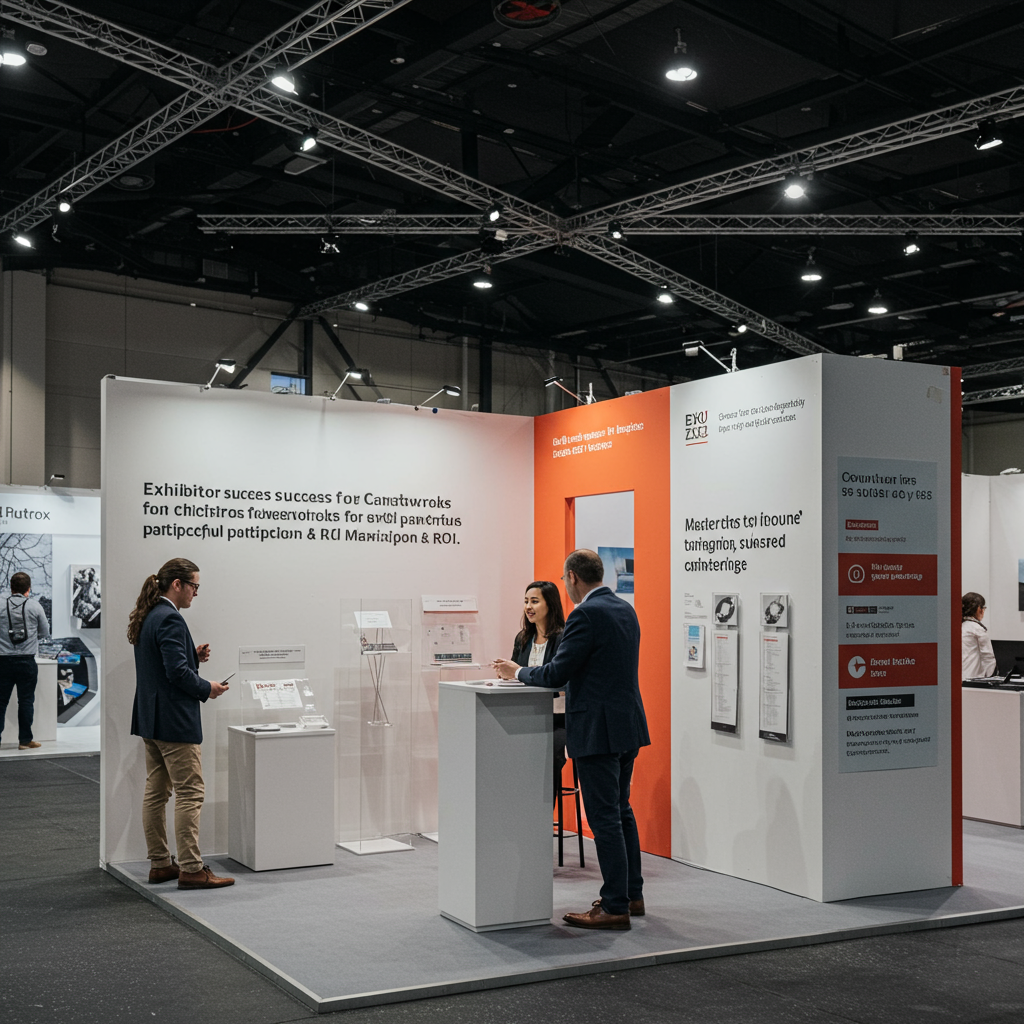
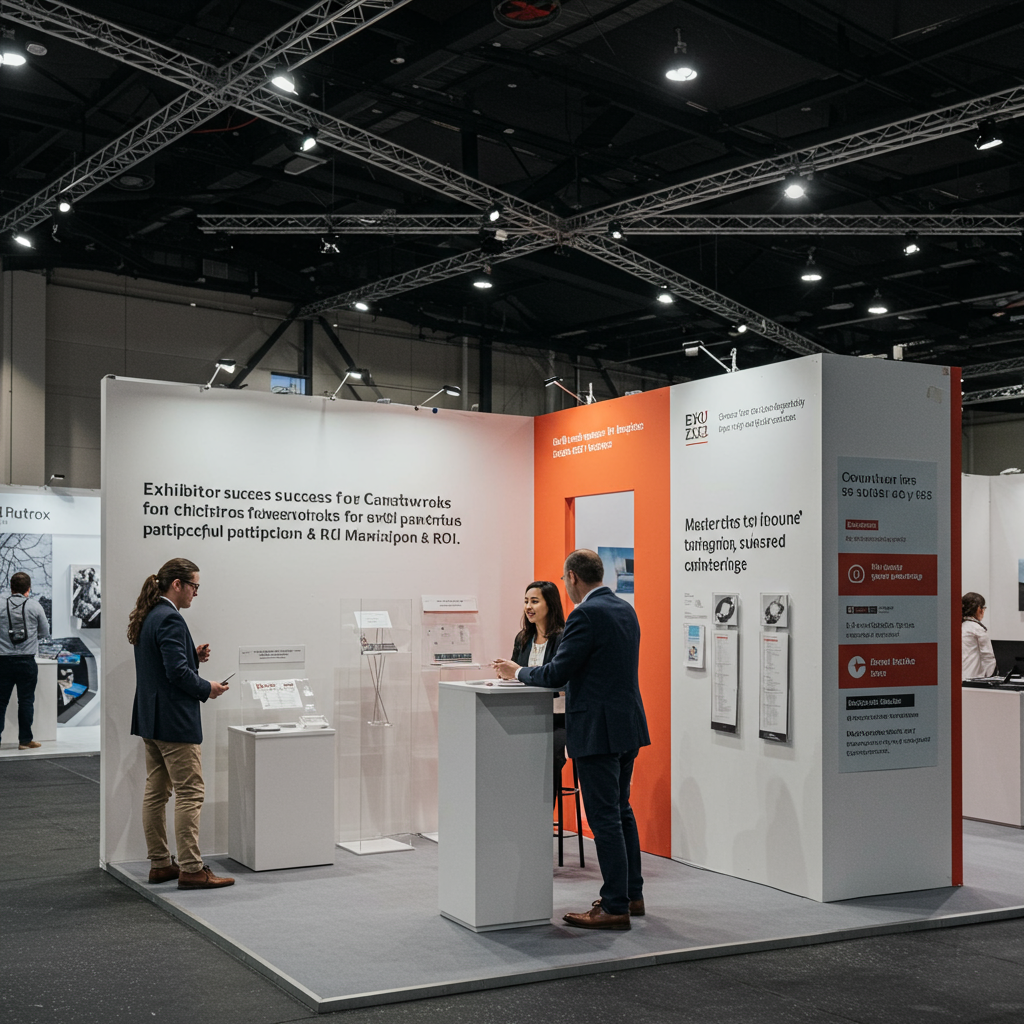
An engaging trade show booth is the physical result of a well-executed successful framework, combining design, technology, and trained staff to attract and convert attendees.
Vision, values and proposal
Focus on results and measurement
Our core vision is to transform trade show participation from a qualitative marketing activity into a quantitative, performance-driven investment. We adhere to the Pareto Principle (80/20 rule), focusing efforts on the 20% of activities that generate 80% of the results. This means prioritizing objectives before a single design element is considered. Are you there to generate leads, close deals, build brand awareness, or conduct market research? Each goal requires a different strategy, budget allocation, and measurement approach. Our standards are aligned with Canadian event industry best practices, including compliance with venue regulations, provincial accessibility standards (like AODA in Ontario), and fire safety codes for booth materials. Every decision is filtered through a matrix that weighs potential impact against cost and required resources.
Main Value: Goals First. We define specific, measurable, achievable, relevant, and time-bound (SMART) goals before all else. For example, “Generate 150 MQLs (Marketing Qualified Leads) with an average lead score of 75+ at a CPL under $150 CAD.”
Quality Criterion: Attendee Experience. Success is directly proportional to the quality of the attendee’s experience. This includes everything from the ease of navigation in the booth to the knowledge of the staff and the relevance of the presented content. We measure this with at-show surveys and post-show NPS scores.
Value Proposition: Predictable ROI. By implementing a rigorous framework of planning and measurement, we move trade show outcomes from unpredictable to predictable. We provide tools to forecast potential ROI based on industry benchmarks and past performance, allowing for more informed investment decisions.
Decision Matrix for Show Selection: Before committing, we evaluate potential Canadian shows based on a weighted scoring system including: attendee demographics vs. target customer profile (30%), past exhibitor ROI data (25%), cost per attendee interaction (20%), competitor presence (15%), and media/PR opportunities (10%). A show must meet a minimum threshold score (e.g., 70/100) to be considered.
Services, profiles and performance
Portfolio and professional profiles
To achieve canadian trade show exhibitor success, a range of integrated services are necessary. Our framework is supported by a team of specialists. An Event Strategist works with clients to define goals and KPIs. The Creative Director translates these goals into a physical and digital booth experience. The Logistics Coordinator manages all operational aspects, from shipping and customs to drayage and R&D labor, ensuring compliance with Canadian union regulations where applicable. Staff Trainers prepare the booth team for effective engagement, and a Data Analyst manages the lead capture process and post-show reporting to calculate ROI and provide insights for future events.
Operational process
Phase 1: Discovery and Strategy (6-9 months before). Kick-off meeting, goal setting, KPI definition, show selection, and initial budget allocation. KPI: Approved strategy with 100% agreement on the main objectives.
Phase 2: Design and Experience (4-6 months before). Conceptual design of the booth, development of interactive elements, and content strategy. KPI: Final design approval with a budget deviation < 5%.
Phase 3: Pre-production and Marketing (2-4 months prior). Booth fabrication, graphic production, pre-show marketing campaign launch (email, social media, PR). KPI: Generate 15% of the target meetings scheduled before the start of the show.
Phase 4: Logistics and Training (1-2 months prior). Shipping, coordination of show services, and intensive training of booth staff. KPI: 100% training completion rate; all shipments arrive 72 hours before the setup date.
Phase 5: On-Site Execution (During the show). Setup, booth management, lead generation, and execution of demonstrations/presentations. KPIs: Daily booth traffic, average dwell time > 3 minutes, meeting lead generation target.
Phase 6: Measurement and Monitoring (0-3 months later). Dismantling, return shipment, distribution of leads to the sales team, launch of the nurturing campaign, and final ROI report. KPI: Lead distribution within 48 hours; Follow-up contact rate > 90%; Final ROI report delivered in 30 days.
Charts and Examples
A $250,000 CAD sales pipeline generated from the event.Brand AwarenessSocial media mentions with the event hashtag (+50%); media coverage (3+ articles); booth traffic (+20% vs. previous year).Interactive booth experience; digital press kit; pre-show influencer campaign.25% increase in web traffic from the event region during and after the show.Product LaunchNumber of demonstrations performed (100+); pre-orders ($50,000 CAD); Product feedback (NPS > 9).Dedicated demo area; exclusive show launch promotion; Real-time feedback surveys.Market validation and achievement of the initial sales target for the new product.
Performance Table by Objective
Main Objective
Key Performance Indicators (KPIs)
Tactical Actions
Expected Result
Lead Generation
Cost Per Lead (CPL) <$175 CAD; 200 Qualified Leads (MQLs)
Lead capture system with qualification questions; raffle to incentivize scans; Staff trained to qualify on-site.
A well-defined operational process, visualized in a Gantt chart, drastically reduces the risk of cost overruns and delays, positively impacting the final ROI.
Representation, campaigns and/or production
Professional development and management
Flawless logistical execution is a fundamental pillar of success at a trade show. This involves meticulous management of multiple vendors, strict deadlines, and venue-specific bureaucracy. Our approach focuses on proactive planning and risk management. We create a detailed execution schedule that begins months in advance, marking critical milestones such as discount periods for event organizer services (electricity, internet, cleaning), which can result in cost savings of up to 30%. For international exhibitors coming to Canada, we handle all customs documentation and brokerage services to ensure that booth materials and products arrive without costly delays. Coordinating the workforce for setup and teardown (R&D) is crucial, especially in cities with strong union regulations, and requires precise scheduling to avoid costly overtime.
Critical Documentation Checklist: Exhibition space contract, proof of liability insurance (typically $2-5 million CAD), organizer service order forms, shipping manifests and customs documentation (ATA Carnet for temporary shipments), booth plans for organizer and fire department approval.
Contingency Stock Planning: For demonstration products or giveaways, we always plan for a 15% safety stock. Additionally, we identify local suppliers in the host city (e.g., Toronto, Calgary) for emergency printing of marketing materials or the purchase of supplies, mitigating the risk of shipping delays.
Operational Contingency Plans: What if the main shipment is delayed? We have a “Plan B” that includes a backup booth design based on locally rented elements and locally printed graphics. What if a key staff member gets sick? We have local staff on call trained on the basics of the product and the company.
Supplier Management: We maintain a database of trusted Canadian suppliers, from audiovisual companies to staffing agencies and florists. All suppliers are evaluated based on their track record of reliability, quality, and pricing. Service level agreements (SLAs) are signed with clear deadlines and deliverables.
This logistics flow minimizes risks by establishing clear checkpoints, contingency plans, and seamless communication between all parties, from the warehouse to the exhibit floor.
Content and/or Media That Convert
Messages, Formats, and Conversions: Optimizing Content for Exhibitor Success at Canadian Trade Shows
Content is the fuel that drives engagement at a trade show. It’s not just about brochures; The goal is to create a cohesive narrative across multiple formats that engages attendees, educates them, and motivates them to take action. An effective “hook” could be a thought-provoking question in a large-format graphic (“Is your supply chain ready for 2025?”) or an interactive demo that solves a common audience problem. Calls to action (CTAs) should be clear and varied: “Scan to download the white paper,” “Join a live demo at 2 p.m.,” “Talk to an expert now.” We conducted A/B testing on pre-event email campaigns to see which subject lines and CTAs generated the most meeting sign-ups. The key conversion metrics we track are the visitor-to-lead conversion rate (target: 15-20%), the attendance rate at scheduled demonstrations (target: 85%), and the digital content download rate via QR codes (target: 10% of total booth visitors).
Phase 1: Content Audit and Brainstorming (16 weeks prior). The content strategist and creative director review existing marketing materials and lead a brainstorming session based on the event objectives and audience profile. The result is a content strategy document.
Phase 2: Core Message Development (14 weeks prior). The copywriter develops the core message and supporting messages for the event. These are adapted to different formats (booth graphics, video scripts, social media posts). Canadian French translation is considered for events in Quebec or at the national level.
Phase 3: Visual Asset Production (12 weeks prior). The design team creates booth graphics, videos, animations, and interactive screen interfaces. The creative director oversees brand consistency.
Phase 4: Interactive Content and Collateral Development (10 weeks prior). ROI calculators, self-assessment quizzes, and augmented reality experiences are developed. Supporting materials (brochures, fact sheets) are designed and printed, minimizing paper use in favor of digital options.
Phase 5: Integration and Testing (6 weeks prior). All digital content is loaded onto the hardware (touchscreens, tablets) and thoroughly tested. The scripts are finalized and used in staff training.
Phase 6: Deployment and Measurement (During the event). The content is deployed. Analytics are used to track which videos are viewed most, which content is downloaded most, and which interactive elements have the longest dwell time. Real-time adjustments are made where possible (e.g., changing the video loop on the main screen).
Content is strategically designed to move an attendee through a conversion funnel, from initial attraction to capturing a qualified lead, directly aligning creative efforts with business objectives.
Training and employability
Demand-driven catalog
The booth staff is the most critical point of contact between a company and its potential customers. A million-dollar booth can fail with an unprepared team. Therefore, we offer specific training modules to maximize staff effectiveness and ensure a consistent and professional brand experience.
Module 1: Canadian Trade Show Fundamentals. Overview of the specific event, attendee demographics, company objectives (KPIs), and knowledge of the main competitors who will be present.
Module 2: The 30-Second Pitch. Develop and practice a concise and compelling value proposition that quickly captures attention and qualifies the visitor.
Module 3: Proactive Engagement Techniques. Training on how to step out from behind the counter, ask open-ended questions, read body language, and engage passersby without being pushy. Includes cultural nuances for the Canadian market.
Module 4: Mastering the Product Demonstration. How to deliver a powerful and personalized demonstration in 3-5 minutes, focusing on the key benefits for the specific prospect.
Module 5: Lead Capture Process and Technology. Hands-on training on using the lead capture device or application, including how to add qualification notes, schedule follow-ups, and ensure all required fields are completed correctly.
Module 6: Managing Difficult Conversations. How to politely and professionally handle questions from competitors, dissatisfied customers, or visitors who are not the target audience.
Module 7: The Post-Show Process. Understanding the lead handover process to the sales team, follow-up timelines, and the role of booth staff in the Adding context to the leads they have generated.
Methodology
Our training methodology is practical and interactive. We use clear assessment rubrics for role-playing sessions, scoring participants on aspects such as message clarity, listening skills, and qualification effectiveness. Practice sessions are recorded for later review and feedback. The goal is for staff not only to memorize information but also to internalize a consultative approach. We expect staff trained with our methodology to achieve a visitor-to-qualified-lead conversion rate at least 25% higher than that of an untrained team. Following the event, this can translate into better career opportunities within your organization, as they have demonstrated their ability to generate tangible business results.
Operational Processes and Quality Standards
From Request to Execution
A standardized operational process is the backbone that ensures quality and consistency, enabling a proactive rather than reactive approach. Our pipeline follows a logical flow with quality gates at each transition.
Diagnosis (9-12 months prior): Initial meeting to understand the client’s needs. The deliverable is an “Event Brief” detailing the objectives, audience, preliminary budget, and perceived challenges. Acceptance Criteria: Written approval of the brief by the client.
Proposal (8 months prior): Development of a comprehensive strategic proposal, including show selection, booth concept, budget breakdown, timeline, and proposed KPIs. Acceptance Criteria: Contract signing and initial deposit payment.
Pre-production (4-7 months prior): Detailed design, technical drawings, graphic and content production. Weekly progress meetings. Acceptance Criteria: Final approval of all designs and content by the client.
Execution (1-3 months prior and during the show): Logistics, staff training, on-site coordination, and daily booth management. Acceptance Criteria: The booth is 100% ready 24 hours before opening; daily lead generation KPIs are met.
Closure and Analysis (Months 1-3 later): Dismantling, return logistics, lead distribution, data analysis, and presentation of the final ROI report. Acceptance Criteria: Submission of the final report within the agreed timeframe and post-mortem review meeting.
Quality Control
Quality control is an ongoing process, not a final inspection. Clear roles are assigned, and escalation points are established for problem resolution.
Roles: The Project Manager is primarily responsible for overall quality. Department Heads (Creative, Logistics) are responsible for quality within their areas.Escalation: Issues are resolved at the lowest possible level. If an issue cannot be resolved by the Department Head within 24 hours, it is escalated to the Project Manager. If it impacts the budget or schedule by more than 10%, it is escalated to the Account Director and the client.
Acceptance Criteria: Each deliverable (e.g., booth design, graphic) has a quality checklist. For example, graphics must pass a 300 dpi resolution check, color consistency (PANTONE), and proofreading.
Service Level Agreements (SLAs): Leads must be distributed to the sales team within 48 hours of the event’s conclusion. Customer inquiries must be answered within 4 business hours.
LogisticsFull shipping manifest; Service bookingAll items accounted for; Written confirmation of all services; Shipment tracked daily.Risk: Customs delay. Mitigation: Working with an experienced Canadian customs broker; Complete and accurate documentation; Shipping with plenty of time.On-site executionStand set up; Functional technology; Staff presentSetup checklist completed; AV and internet testing 12 hours prior to opening; All staff must be registered and at the booth 1 hour prior to the event.Risk: AV equipment failure. Mitigation: On-site or on-call technician; backup hardware for critical components (e.g., extra laptop).Post-ShowClean lead database; ROI report100% contact data validation; <2% deviation between projected and actual ROI (calculated at 6 months).Risk: Incorrect or incomplete lead data. Mitigation: Verification process at the time of capture; Software that validates email formats.
Quality Control Table by Phase
Phase
Key Deliverables
Quality Control Indicators
Risks and Mitigation
Pre-production
Technical drawings of the stand; Final graphic files
100% compliance with the organizer’s specifications; Approval of the physical color proof; No typographical errors.
Risk: Rejection of the drawings by the organizer. Mitigation: Submission 2 weeks before the deadline; Review by a second pair of eyes.
Application Cases and Scenarios
Case 1: SaaS Startup at Collision Conference, Toronto
Scenario: A US-based software-as-a-service (SaaS) startup with 50 employees wanted to use its first participation in the Collision Conference in Toronto to generate high-quality leads, gain media coverage, and gauge interest in the Canadian market. Its budget was $75,000 CAD for a turnkey booth in a 3×6 meter space.
Focus and Success Framework: The primary objective was the Cost Per Qualified Lead (CPLq). A “qualified lead” was defined as a contact from a company with more than 100 employees and identified decision-making authority. A highly aggressive pre-event marketing strategy was implemented, utilizing the event app’s attendee list to request meetings. The booth design was minimalist, centered around a large touchscreen for interactive software demonstrations. Staff were trained to qualify visitors in under two minutes using a series of three key questions in their lead capture app.
Results and KPIs:
Cost per Qualified Lead: $75,000 / 185 = $405 CAD (Goal was < $500)
Scheduled on-site meetings: 42
Media coverage: 2 articles in technology publications and 1 podcast interview.
Value of the Pipeline Generated (after 3 months): $350,000 CAD
ROI (at 6 months): 3.5:1 ($262,500 in closed deals / $75,000 investment)Case 2: European Industrial Manufacturer at the Global Energy Show, Calgary
Scenario: A German manufacturer of industrial valves wanted to strengthen its relationships with its existing Canadian distributors and introduce a new product designed for the oil and gas sector. The goal was not the quantity of leads, but the quality of the interactions and the distributors’ adoption of the new product. The space was 6 x 12 meters with a budget of $200,000 CAD.
Approach and Framework for Success: The booth was designed with a semi-private hospitality area for meetings with distributors and a highly visible demonstration area for the new product, featuring a full-size model and a simulation of its operation. A personalized email campaign was launched to invite key customers and distributors to private cocktail receptions at the booth each afternoon. The primary KPI was the number of distributors who committed to placing an initial order for the new product.
Results and KPIs:
Meetings with Key Distributors: 28 (100% of target)
Initial Order Commitments: 15 of 28 distributors (54% conversion rate)
Value of Initial Orders: €1.2 million
New Customer Leads: 65 (a secondary target)
Net Promoter Score (NPS) of distributors post-event: +55
ROI (at 12 months, including recurring sales): 8:1
Case 3: Organic Food Company at CHFA NOW, Vancouver
Escenario: A British Columbia family business that produces organic snacks wanted to increase its brand awareness and get contracts with retailers across the country. Its stand was a 3×3 meter in the section of new exhibitors, with a modest budget of 25,000 $ CAD.
Focus and framework of success: The strategy focused on the sensory experience. The stand used natural materials and offered constant samples of its products. The goal was to create expectation on social networks. An Instagram contest was launched in which attendees posted a photo on the stand with a specific hashtag to earn a one-year snack supply. KPIs focused on social engagement and the number of follow-up meetings with retail buyers.
Results and KPIs:
Muestras Distribuidas: >5.000
Instagram mentions with hashtag: 850+
New followers on Instagram: +1,500 during the 2 days of the event
Retail Leads collected: 110
Scheduled follow-up meetings: 35
New achieved retail accounts (at 4 months): 12, including a regional chain.
Impacto: The notoriety generated helped them close a round of seed financing 6 months later. The direct ROI in sales was 2:1, but the brand ROI was incalculable.
Step-by-step guides and templates
Guide 1: The 12-month Master Plan for a Canadian Trade Fair
12-10 months before: Strategy and Selection
Define the objectives (Smart).
Establish a preliminary budget (+/- 20%).
Investigate and select the most suitable trade fair using a decision matrix.
Reserve the stand space for the best location and early booking prices.
9-7 months before: design and planning
Select a stand design/building partner.
Start the conceptual design process.
Create the project plan with clear milestones and deadlines (Gantt).
Assign roles and responsibilities to the internal team.
6-4 months before: marketing and content
Finish the design of the stand and the graphics.
Develop content strategy (digital and print).
Plan the pre-event marketing campaign (email, social networks, public relations).
Book any sponsorship or advertising at the event.
3-2 months before: logistics and operations
Place all orders for the organizer’s services (electricity, internet, cleaning) to take advantage of the discounts.
Organize shipping and customs logistics (if applicable).
Book trips and accommodation for the team.
Select and schedule stand staff.
1 month before: training and final promotion
Carry out the training session of the stand staff.
Launch the pre-event marketing campaign to schedule meetings.
Confirm all shipments and services.
Prepare the display kit for the equipment (schedules, contacts, leadssheets).
Event Week: Execution
Monitor stand installation.
Hold a briefing with the team on site.
Run, measure daily KPIs and adjust strategy if necessary.
monitor disassembly.
1-3 months after: tracking and measurement
Send thank you notes and distribute the leads in 48 hours.
Launch the lead nutrition campaign.
Collect all costs and performance data.
Calculate the ROI and prepare the final report.
Hold a post-mortem meeting to identify lessons learned.
Guide 2: How to design a stand that generates traffic
Step 1: Define the main function. Is the stand for demonstrations, meetings, hospitality or lead generation? The function will dictate the design. A lead generation stand needs an open and accessible front, while a meeting needs semi-private areas.
Step 2: Clear and concise messages. A wizard dedicates 3 to 5 seconds to pass through. Your main message should be visible from the hallway and answer the question “What does this company do for me?”. Use a hierarchy: large headline, explanatory subtitle, vignettes with benefits.
Step 3: Use the lighting strategically. The lighting can guide the view, create atmosphere and highlight products. Use spotlights for key messages and products. The backlight of the graphics makes them stand out.
Paso 4: Incorpore Elementos Interactivos. A touch screen, a RA/VR experience, a game or a practical demo attract people and increase their stay time. Commitment leads to conversation.
Step 5: Think about the traffic flow. Design the stand so people can easily get in and move around. Avoid bottlenecks. Place the reception desk on one side so as not to block the entrance.
Step 6: Height is her friend. Use the vertical space with high structures or hanging signage (if the event allows) to be visible from afar in the exhibition hall.
Paso 7: Almacenamiento Inteligente. Integrate cabinets and storage in the design of the stand to keep it tidy and without boxes or coats in sight.
Guide 3: The Post-Show Leads Tracking Process in 5 Steps
Step 1: Immediate classification (day 1-2 post-show). Don’t wait. Export all leads and classify them into categories (e.g., A: Hot Lead, B: Nurture, C: Keep Informed) based on the booth staff notes.
Step 2: The first custom contact (day 2-3 post-show). Send a tracking email. It should not be a generic email. Refer to the conversation you had at the stand. The issue could be “Continuing our [event name] conversation”. The goal is to offer value, not sell. Link to a resource they talked about.
Step 3: Transfer to the sales team (day 3-4 post-show). Import the leads in the CRM, assigning the category leads to the appropriate sales representative with all the contextual information. Set an SLA for the sales team to make the first phone contact in 24-48 hours.
Step 4: Start long-term nutrition (week 2 post-show). Enroll category B and C leads in a relevant drip nutrition campaign. This campaign must provide useful and educational content for several weeks or months to keep your brand in the customer’s mind.
Paso 5: Medir, Analizar, Repetir (Mes 1-6 Post-Show). Track lead to opportunity conversion rate and opportunity to customer for each event. Use this data to calculate the final ROI and to inform your strategy for the next event.
Internal and external resources (no links)
Recursos internos
Trade show budget template (spreadsheet)
Trade Show Planning Checklist (Document)
Briefing model for stand staff (presentation)
Post-event report template and ROI calculation (spreadsheet)
Brand style guide for stand design
Reference external resources
Canadian Special Events Society regulations (CANSPEP)
Accessibility Standards for Persons with Disabilities in Ontario (AODA)
Guides and regulations of the National Fire Code of Canada for display materials
Information from the Canada Border Services Agency (CBSA) on the temporary importation of goods for conventions
Best Practices of the Center for Exhibition Industry Research (CEIR)
Preguntas frecuentes
What is the average cost of exhibiting at a major Canadian trade fair?
The cost varies greatly, but a general rule is to budget around 3 times the cost of the stand space. If the space costs $10,000, a total budget of $30,000 is a reasonable starting point. This is approximately broken down into: 33% for space, 33% for the design and construction of the stand, and 33% for operating expenses (services, shipping, personnel, travel, marketing). For a 3×3-meter stand at a major national fair in Toronto or Vancouver, a total budget can range from $15,000 to $40,000 CAD.
Do I need to worry about customs if I ship my booth from the United States?
Yes, absolutely. Treat Canada like any other international country. To avoid delays and unexpected fees, it is highly recommended to work with a Canadian customs agent. The best tool for temporary importation of stands and products is an ATA card, which acts as a passport for your merchandise. Make sure all documentation is accurate and presented well in advance.
Are bilingual content (English and French) mandatory?
Legally, it is only mandatory for events organized by the federal government. However, for any national event or held in Quebec or near Ottawa, it is a highly recommended business practice. Providing key messages in both official languages shows respect and broadens your reach. At a minimum, your main message and basic brochures should be available in French.
What is the best way to measure the ROI of a trade fair?
The ROI is calculated as (investment gain – investment cost) / investment cost. The hard part is to attribute the profit. You must track event leads through your CRM until they become sales. For a simple formula: (Value of Pipeline generated x Historical closing rate) – Total cost of the event. Calculate this at 6 and 12 months after the event to get a more accurate image, since B2B sales cycles can be long.
How can I make my stand stand out if I have a small budget?
Creativity beats the budget. Instead of a large structure, invest in excellent graphic design and smart lighting. Focus your budget on a single attractive interactive element. The most important thing is to have an exceptionally well-trained, proactive and energetic stand staff. An incredible human team at a simple stand will always beat a passive team on an expensive stand.
Conclusion and call to action
Success in the competitive landscape of Canadian trade fairs is not an accident; It is the result of meticulous planning, disciplined execution and unwavering commitment to measurement. By adopting a structured framework such as the one detailed in this guide, companies can transform their expensive brand exercises and uncertain results to powerful lead generation and revenue growth engines. From the definition of clear KPIs as a target CPL of $175 CAD to achieving a 5:1 ROI, each step of the process should be aligned with quantifiable results. This strategic approach is the definitive key to achieving a canadian trade show exhibitor success consistent and defensible. Start implementing these processes today and turn your next trade show into your most profitable marketing investment of the year.
Glosario
Drayage (o Material Handling)
The service of moving your exhibit materials from the loading dock to your stand and back after the event. This service is mandatory and is controlled by the general contractor of the event.
I&D (Installation & Dismantle)
The process of building (“installing”) and dismantling (“dismantled”) your exhibition stand. Often performed by specialized or syndicated labor contracted through the event organizer.
Lead Retrieval
The system, often a mobile app or handheld scanner, used by exhibitors to scan attendee credentials and collect their contact information digitally.
ROI (Return on Investment)
A performance metric used to assess the efficiency of an investment. For trade fairs, it is calculated by comparing the net profit (sales attributed minus the cost) with the total cost of the event.
CPL (Cost Per Lead)
The total cost of participation in the fair divided by the total number of leads collected. A key metric to assess the efficiency of lead generation.
Turnkey Booth
A “turnkey” or rental stand that includes the structure, graphics, flooring, lighting and sometimes even installation and disassembly, all for a unique price. It is a popular option for international exhibitors or with smaller budgets.
Short, practical training to master a specific events discipline., sed do eiusmod tempor incididunt ut labore et dolore magna aliqua. Ut enim ad minim veniam, quis nostrud exercitation ullamco laboris nisi ut aliquip ex ea commodo consequat. Duis aute irure dolor in reprehenderit in voluptate velit esse cillum dolore eu fugiat nulla pariatur. Excepteur sint occaecat cupidatat non proident, sunt in culpa qui officia deserunt mollit anim id est laborum. Ut enim ad minim veniam, quis nostrud exercitation ullamco laboris nisi ut aliquip ex ea commodo consequat. Duis aute irure dolor in reprehenderit.