
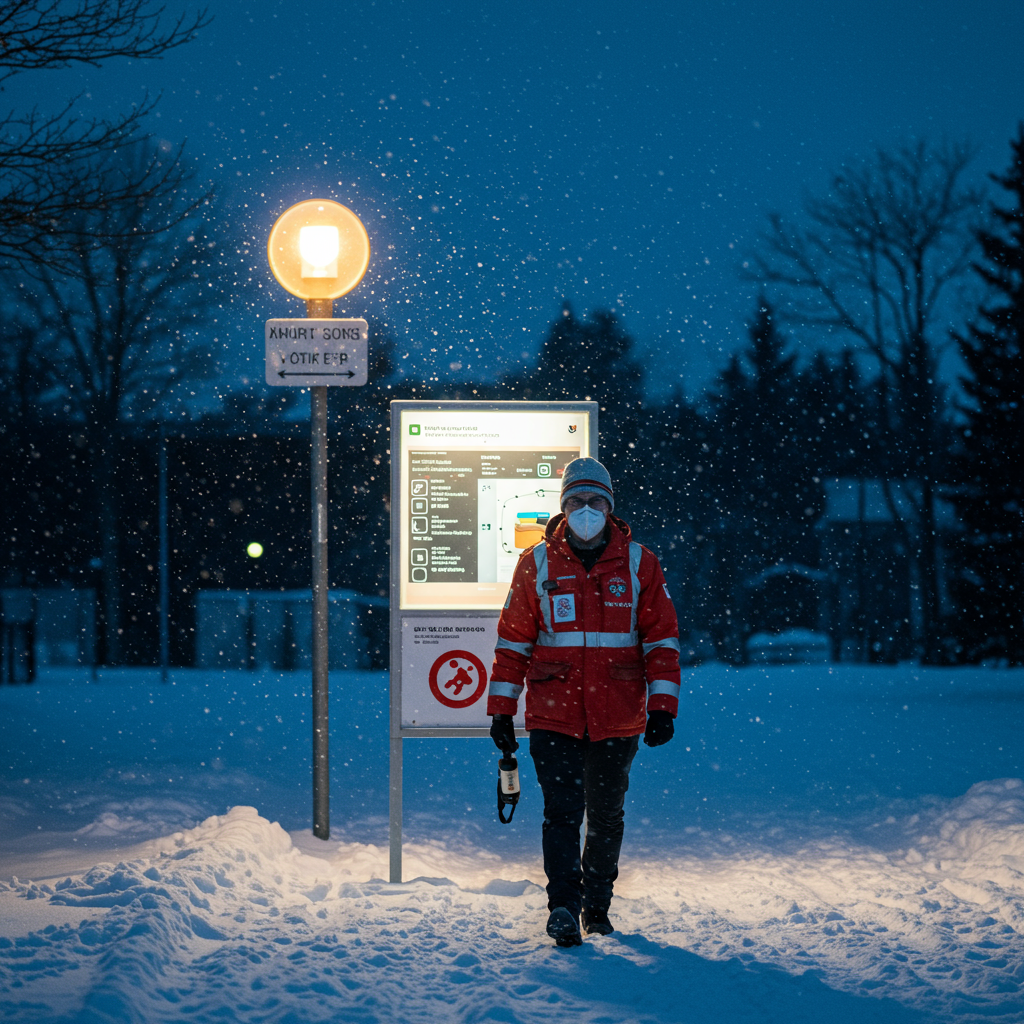
A Comprehensive Guide to Medical Coverage Levels for Events in Canada
Successfully managing an event in Canada requires a robust and compliant safety plan, with a primary focus on attendee well-being. This guide provides a detailed framework for event organizers, venue managers, and safety officers to navigate the complexities of establishing appropriate medical coverage. We delve into a risk-based methodology for assessing needs, from small corporate functions to large-scale festivals. The core of this article is to empower planners with the knowledge to select the correct medical coverage levels for events in Canada, thereby mitigating legal liability, protecting brand reputation, and ensuring a safe experience for all. Key performance indicators discussed include incident response times (target: <3 minutes), reduction in incident severity scores, and achieving 100% compliance with provincial and municipal regulations, ultimately enhancing attendee confidence and overall event success.
Introduction
Organizing any event, regardless of its scale, carries an inherent duty of care for the safety and well-being of every attendee, staff member, and volunteer. In Canada, this responsibility is not just a moral obligation but a legal one, governed by a complex web of provincial legislation, municipal bylaws, and industry best practices. A critical component of this duty is the provision of adequate medical services. Determining the correct medical coverage levels for events in Canada is a nuanced process that extends far beyond a simple first aid kit. It involves a systematic evaluation of potential risks, the demographics of the attendees, the nature of the activities, and the physical environment of the venue. Failure to provide appropriate coverage can lead to tragic outcomes, significant legal liability, and irreparable damage to an organization’s reputation.
This article presents a comprehensive methodology for event planners to accurately assess their needs and implement a scalable, effective medical response plan. We will explore a data-driven approach, utilizing risk assessment matrices and performance metrics to ensure that the level of medical support is proportional to the potential for harm. Key performance indicators (KPIs) are central to this process, including measuring the average time from incident report to patient contact (with a goal of under three minutes), tracking the incident severity index to identify trends, and aiming for a Net Promoter Score (NPS) related to safety and care of over +50. By following this framework, organizers can move from a reactive to a proactive safety culture, ensuring a secure environment for everyone involved.
Vision, values and proposal
Focus on results and measurement
Our vision is a Canadian event landscape where every public gathering is supported by a meticulously planned and professionally executed medical safety net, eliminating preventable harm. This is built on a foundation of core values: safety before all else, unwavering compliance with regulations, proportionality in resource allocation, and a commitment to continuous improvement through rigorous post-event analysis. We apply the 80/20 principle: while 80% of event-related medical issues are minor (e.g., blister packs, dehydration, minor cuts), our planning and resources must be robust enough to handle the 20% of high-acuity, life-threatening emergencies (e.g., cardiac arrest, anaphylaxis, severe trauma) with speed and clinical excellence. Our approach is aligned with leading Canadian technical standards, including CSA Group’s Z1210-17 (First aid training), provincial Occupational Health & Safety (OH&S) Acts, and the specific event guidelines issued by major municipalities such as Toronto, Vancouver, and Calgary.
-
- Risk Mitigation: Our primary value is to reduce our clients’ exposure to legal and financial liability. A well-documented, standards-based medical plan is the strongest defense against negligence claims. Decision-making is based on a clear matrix that justifies every resource, from a single first aider to a full field hospital.
- Reputation Enhancement: A visible, professional, and compassionate medical presence demonstrates a profound commitment to attendee welfare, building trust and a positive brand image. This translates into higher attendee confidence and loyalty.
– Operational Excellence: We integrate medical services seamlessly into the overall event command structure using the Incident Command System (ICS). This ensures efficient communication and coordinated responses with security, operations, and external emergency services, minimizing response times and confusion during a crisis.
- Compliance Assurance: We guarantee that every medical plan we develop meets or exceeds the requirements of all applicable jurisdictions. This includes securing necessary permits and ensuring all personnel hold valid, provincially recognized licenses and certifications.
Services, profiles and performance
Portfolio and professional profiles
We offer a complete suite of services designed to provide end-to-end medical solutions for any event. The selection and combination of these services are dictated by the risk assessment, ensuring the medical coverage levels for events in Canada are precisely tailored to the need. Our services include initial risk consulting, development of a detailed Medical Action Plan (MAP), provision of on-site medical staffing, deployment of medical facilities (tents, trailers) and vehicles (first response units, ambulances), and comprehensive post-event data analysis and reporting.
Our team consists of certified professionals, each with a specific role:
- Medical First Responder (MFR): Trained in advanced first aid, CPR, and automated external defibrillation (AED). Ideal for low-risk events and as initial responders in a tiered system.
- Emergency Medical Responder (EMR): Possesses a more advanced skill set, including oxygen administration, basic airway management, and detailed patient assessment. The backbone of many medium-risk event teams.
- Primary Care Paramedic (PCP): Provincially licensed professionals trained in administering symptom-relief medications, performing semi-automated defibrillation, and managing more complex medical conditions.
- Advanced Care Paramedic (ACP): Highly skilled paramedics with the ability to perform advanced life support procedures, including intravenous (IV) therapy, advanced airway management, and administering a wide range of emergency medications.
- Registered Nurse (RN): Brings a broad clinical perspective, particularly valuable for post-treatment care, patient monitoring in medical tents, and managing complex patient histories.
- Physician (MD): Provides on-site medical direction, performs advanced diagnostics and procedures, and makes definitive decisions on patient disposition, which is critical for high-risk, large-scale events.
Operational process
- Phase 1: Needs Analysis: An initial consultation to gather all event parameters. KPI: Proposal with tiered options delivered to client within 48 hours.
- Phase 2: Quantitative Risk Assessment: We use a proprietary, weighted matrix to score the event’s risk profile. KPI: Assessment completed and risk score calculated within 24 hours of receiving full event details.
- Phase 3: Medical Action Plan (MAP) Development: A comprehensive document is drafted detailing personnel, equipment, protocols, and communication plans. KPI: Draft MAP delivered for review within 5 business days of contract signing.
- Phase 4: Resource Allocation and Logistics: Staff are scheduled, equipment is serviced and inventoried, and coordination with local EMS is initiated. KPI: All staff and major assets confirmed and scheduled 14 days prior to the event.
- Phase 5: On-site Deployment and Operation: The team executes the MAP under the direction of an on-site medical lead, responding to incidents and documenting all patient interactions. KPI: Average response time from dispatch to patient contact is under 3 minutes.
- Phase 6: Post-Event Reporting and Debrief: A final report containing all incident data, patient statistics, and operational insights is compiled and delivered to the client. KPI: Final report delivered within 72 hours of event conclusion.
Tables and examples
| Objective | Indicators | Actions | Expected result |
|---|---|---|---|
| Minimize patient transports to hospital | Hospital transport rate (<5% of total patients) | Deploy an on-site physician and advanced care paramedics with enhanced treatment protocols. | Increased capacity to treat and discharge patients on-site, reducing strain on local EMS. |
| Ensure rapid response in large venues | Average time to patient contact (<3 minutes) | Implement a grid-map system with multiple mobile foot or bike teams. | 95% of all calls for assistance are reached within the 3-minute target window. |
| Maintain 100% regulatory compliance | Number of compliance-related issues (Target: 0) | Conduct a pre-event audit of the MAP against all relevant provincial and municipal bylaws. | The event proceeds without any warnings, terminations, or shutdowns related to medical services. |
| Improve attendee perception of safety | Post-event survey scores on safety (Target: >4.5/5) | Ensure medical stations are highly visible, clearly signed, and staffed by professional, approachable personnel. | Attendees report feeling safe and well-cared for, enhancing the event’s overall reputation. |

Representation, campaigns and/or production
Professional development and management
The “production” aspect of event medical services involves meticulous logistical planning and management to ensure the right people with the right equipment are in the right place at the right time. This begins with rigorous professional management. All personnel undergo a stringent vetting process; we verify their provincial licenses, certifications (e.g., CPR, advanced life support), and background checks. A key component is securing the appropriate permits. In many Canadian jurisdictions, an event’s medical plan must be submitted to and approved by the local Emergency Medical Services or municipal event office. We manage this entire process, liaising with authorities to ensure the plan is not only compliant but also integrated with the local 911 system.
Supplier and equipment coordination is another critical function. We maintain a network of certified suppliers for everything from basic first aid consumables to advanced cardiac monitors and ambulances. All equipment is subject to a rigorous biomedical engineering certification schedule. The execution timeline is planned backward from the event date, with critical milestones for staffing confirmation, equipment staging, and pre-event briefings. This ensures a seamless deployment on event day.
- Critical Documentation Checklist:
- Signed contract and statement of work.
- Certificate of Insurance ($5M minimum Commercial General Liability).
- Copies of all deployed staff’s provincial licenses and certifications.
- Approved Medical Action Plan (MAP) from client and authorities.
- Equipment maintenance and calibration logs.
- Contingency Planning:
- Alternate suppliers for critical medical equipment (e.g., oxygen).
- A standby list of qualified staff to cover last-minute illness.
- Pre-determined protocols for extreme weather events (heatwaves, thunderstorms).
- A Mass Casualty Incident (MCI) plan with clear triggers for activation and roles for all staff.
- Secondary and tertiary hospital destinations pre-identified in case the primary receiving hospital goes on diversion.

Content and/or media that converts
Messages, formats and conversions
In the context of event medical services, “content that converts” is not about selling tickets but about communicating value and building trust with event organizers. The primary message is that professional medical coverage is a non-negotiable investment in risk management and brand protection. Our content aims to educate organizers on their legal duty of care and the tangible ROI of a proactive safety plan, which includes lower insurance premiums and enhanced stakeholder confidence. A key hook is demonstrating how a scalable approach to medical coverage levels for events in Canada can be both effective and cost-efficient. Calls to action (CTAs) are focused on engagement and consultation, such as “Download our Event Risk Calculator” or “Schedule a 15-minute consultation to discuss your event’s safety needs.” We can A/B test proposal formats—one focusing on compliance and liability, the other on attendee experience and care—to see which resonates more strongly with different client types.
The most critical piece of content is the Medical Action Plan (MAP). It is the tangible product of our expertise and the document that converts a potential client into a partner. The workflow for its production is a collaborative process:
- Client Intake & Data Collection (Planner/Client):The event organizer provides detailed information through a structured online form or consultation call. This includes venue maps, schedules, expected demographics, and a list of specific activities.
- Risk Assessment & Analysis (Medical Director):Our medical director uses the collected data to populate a risk assessment matrix. Each factor (e.g., crowd density, presence of alcohol, type of sport) is assigned a weighted score.
- Resource Allocation Proposal (Operations Manager): Based on the final risk score, the operations manager drafts a proposal outlining the recommended staffing levels, equipment, and facilities. This is where different service tiers are presented.
- MAP Drafting (Medical Director/Planner): Once the proposal is accepted, the full MAP is written. This comprehensive document includes command charts, communication plans, treatment protocols, and emergency procedures (fire, evacuation, MCI).
- Internal & External Review (Client & Authorities):The draft MAP is sent to the client for review and, where required, submitted to local EMS or the municipality for approval. Feedback is incorporated.
- Finalization & Distribution (Project Manager):The final, approved MAP is distributed to the on-site medical team, event security, operations leads, and any other relevant stakeholders at least 72 hours before the event.

Training and employability
Demand-oriented catalogue
To ensure the highest quality of care, we believe in continuous education and specialized training for even medical professionals. This not only improves our service delivery but also enhances the employability of individuals within the niche field of mass gathering medicine. Our training catalog is developed based on the specific demands of the event environment.
- Module 1: Mass Gathering Medicine Fundamentals: Covers the unique epidemiology of event injuries/illnesses, patient assessment in challenging environments, and event-specific documentation.
- Module 2: Advanced Event First Aid & Patient Triage:Based on CSA Z1210-17 standards but with a focus on scenarios common to events, including heat stroke, substance-related emergencies, and multi-patient triage using START (Simple Triage and Rapid Treatment).
- Module 3: Incident Command System (ICS) for Medical Teams: Training on ICS 100 and 200, focusing on how medical teams integrate into a unified event command structure, ensuring clear communication and roles during a major incident.
- Module 4: Event-Specific Scenario Training: Practical, high-fidelity simulations of common event emergencies, such as a stage collapse (trauma), a contaminated food outbreak (gastrointestinal illness), or a severe weather event requiring evacuation.
- Module 5: Mental Health First Aid for Events: Equips respond to recognize and provide initial support for attendees experiencing mental health crises, such as anxiety attacks or substance-induced psychosis, in a compassionate and effective manner.
Methodology
Our training methodology is hands-on and performance-based. Theoretical knowledge is delivered through online modules, which must be completed before attending in-person sessions. The core of the training is practical skill stations and immersive, realistic simulations. Performance is evaluated using a detailed rubric that assesses critical thinking, clinical skills, communication, and teamwork. Successful completion leads to a certification that is recognized by our network of event production partners. We actively facilitate employment opportunities by maintaining a job board for certified professionals and offering internship placements at events we cover, providing a clear pathway from training to active employment in the event medical field.
Operational processes and quality standards
From request to execution
Our operational pipeline is a standardized, transparent process that ensures consistency and quality from the first point of contact to the final report.
- Diagnosis (Initial Request): The client submits an inquiry with basic event details. Our team conducts a brief triage to categorize the event as low, medium, or high complexity.
- Proposal (Risk Assessment & Quoting): We perform the detailed risk assessment and generate a formal proposal with several tiered options for medical coverage. Each tier clearly specifies the number and type of staff, equipment, and cost. Deliverable: Detailed Service Proposal. Acceptance Criteria: Client selects a tier and signs the service agreement.
- Pre-production (Planning & Logistics): The core planning phase where the MAP is developed, staff are rostered, equipment is allocated, and all necessary external coordination with authorities is completed. Deliverable: Finalized Medical Action Plan. Acceptance Criteria: Plan is approved by the client and, if necessary, by local EMS/municipality.
- Execution (On-site Operations): The medical team deploys and operates according to the MAP. All activities and patient encounters are meticulously logged in real-time using digital patient care reporting software. Deliverable: Live medical coverage and incident documentation. Acceptance Criteria: Zero safety-related operational failures and adherence to response time SLAs.
- Closure (Reporting & Invoicing): The on-site lead submits all documentation. A comprehensive post-event report is generated, analyzing incident data and providing recommendations. The final invoice is issued. Deliverable: Post-Event Incident & Data Report. Acceptance Criteria: Report is delivered within 72 hours and accepted by the client.
Quality control
Quality is not an afterthought; it is embedded in every stage of our process through a system of checks and balances.
- Roles: The Medical Director has ultimate oversight of clinical quality. The Operations Manager ensures logistical and regulatory compliance. The On-site Team Lead is responsible for real-time operational quality and adherence to protocols. A dedicated Quality Assurance (QA) Officer audits all patient care reports post-event.
- Escalation Protocol: A clear, color-coded protocol defines triggers for escalating a clinical situation (e.g., vital signs thresholds that mandate immediate transport) or an operational issue (e.g., a communication system failure that triggers the deployment of backup systems).
- Service Level Agreements (SLAs): Key performance metrics are contractually defined. For example, a maximum average response time of 3 minutes to reach a patient in the primary event area, and a commitment to complete 100% of Patient Care Reports before clearing the site.
| Phase | Deliverables | Control indicators | Risks and mitigation |
|---|---|---|---|
| Pre-production | Medical Action Plan (MAP), Staff Roster | MAP compliance score against local bylaws; Staff certification verification rate (100%). | Risk: Inadequate plan leads to on-site failure. Mitigation: All high-risk plans undergo a mandatory peer review by a second Medical Director. |
| Execution | Digital Patient Care Reports (ePCRs), Incident Log | Real-time tracking of response times; ePCR completion rate at time of incident closure (>95%). | Risk: Staff burnout or performance degradation during long events. Mitigation: Mandatory rest and rehab cycles for staff on shifts >8 hours; On-site team lead actively monitors for fatigue. |
| Closing | Post-Event Data Report | Report delivery time (<72 hours); Data accuracy audit (error rate <1%). | Risk: Inaccurate data leads to poor future planning. Mitigation: Use of ePCR software with mandatory fields and validation rules; QA Officer audits 100% of high-acuity reports and a 10% random sample of all others. |
Cases and application scenarios
Case 1: Low-Risk Indoor Technology Conference
Scenario: A three-day conference for 750 software developers held at a downtown convention center. The event consisted of keynote speeches, breakout sessions, and a small exhibition hall. Attendee demographic was primarily 25-50 years old. No alcohol was served during session hours.
Risk Assessment: The event scored 18 out of 100 on our risk matrix. Factors included a climate-controlled indoor environment, a sedentary activity, a low-risk demographic, and robust venue infrastructure with easy access for municipal EMS.
Medical Coverage Plan: The determined level was “Basic Life Support.” We deployed one provincially certified Emergency Medical Responder (EMR) per day for the 10-hour duration. The EMR was equipped with an advanced first aid kit, oxygen, and an AED. They were stationed at a highly visible fixed first aid post near the main registration area. The total cost for the client was approximately CA$2,500 for the three days.
Execution & KPIs:Over the three days, the EMR managed five patient contacts. Incidents included one person feeling faint (resolved with rest and hydration), two requests for over-the-counter medication for headaches, one minor paper cut, and assisting an attendee with their personal blood sugar monitoring device. The average time to patient contact for a call within the venue was 2 minutes and 15 seconds. No 911 activations were required. A post-event survey showed a 98% satisfaction rate with the visibility and professionalism of the medical support. The ROI was demonstrated through the client’s peace of mind and fulfillment of their duty of care at a predictable, manageable cost.
Case 2: Medium-Risk Charity 10K Run
Scenario: A 10-kilometer road race organized by a local charity with 3,500 registered runners. The course runs through city parkways on a warm July morning. The event also included a post-race celebration in a park with food trucks and live music.
Risk Assessment: The event scored 62 out of 100. Key risk factors were the high-exertion activity leading to potential for heat illness, dehydration, and cardiac events; the linear, spread-out nature of the venue (the race course); and the large number of participants.
Medical Coverage Plan: A multi-layered “Advanced Life Support” plan was required. The plan included:
- A main medical tent at the finish line, staffed with 1 Emergency Physician, 2 Registered Nurses, and 4 Primary Care Paramedics (PCPs). It was equipped like a small emergency room with cots, IV supplies, and advanced cardiac monitoring.
- Two first aid stations along the 10km course, each staffed with 2 EMRs.
- Two mobile response teams on bicycles, each comprising two PCPs, able to navigate the course quickly.
- One ambulance dedicated on standby at the finish line for rapid transport.
Execution & KPIs:The medical team managed 112 patient contacts during the 6-hour event. The majority (approx. 80%) were minor issues like blisters, muscle cramps, and minor abrasions from falls. 20 patients required more significant treatment for dehydration and heat exhaustion in the main medical tent. Two patients were transported to the hospital by the on-site ambulance: one for a suspected ankle fracture and another for observation after experiencing chest pain post-race. The bicycle teams were critical, with an average response time to an incident over the course of 3 minutes and 40 seconds. The plan successfully prevented the local 911 system from being overwhelmed by race-related calls.
Case 3: High-Risk, Multi-Day Electronic Music Festival
Scenario: A three-day outdoor music festival on a rural property, with 25,000 attendees per day and on-site camping. The event featured multiple stages, large crowds, and ran for over 12 hours each day. The presence of alcohol and a high potential for illicit substance use were recognized risks.
Risk Assessment: This event scored a 95 out of 100, placing it in the highest risk category. Factors included the massive attendance, high-density crowds, prolonged duration, remote location (30+ minutes from the nearest hospital), environmental exposure, and high-risk behaviors.
Medical Coverage Plan: This required a comprehensive, hospital-level system, a clear example of the highest medical coverage levels for events in Canada. The plan was developed in consultation with regional EMS. It featured:
- A central field hospital with 2 Emergency Physicians, 6 RNs, 8 Advanced Care Paramedics (ACPs), and 10 PCPs. It contained separate areas for critical care, intoxication management, and general treatment.
- Three satellite first aid tents located near major stages and camping areas, each staffed with a mix of PCPs and EMRs.
- Six roaming teams, each with one PCP and one EMR, embedded in the crowd.
- Two dedicated 4×4 off-road response units for extraction from difficult terrain.
- Three on-site ambulances for transport.
- A dedicated mental health and harm reduction team, offering a safe space and non-judgmental support.
Execution & KPIs:Over the 72-hour period, the medical system handled over 1,200 patient encounters. This included hundreds of minor cases, but also 75 serious cases requiring physician-level care, including substance-related overdoses, severe dehydration, and trauma from falls. 55 patients were transported to hospital. The on-site field hospital was able to successfully treat and discharge over 95% of patients, a critical KPI that preserved regional hospital capacity. During one incident involving a crowd emerges, the medical team triaged and treated 15 patients within 30 minutes, demonstrating the effectiveness of their Mass Casualty Incident plan. The comprehensive coverage was credited by local authorities for preventing fatalities and ensuring the event could continue safely.
Step-by-step guides and templates
Guide 1: How to Conduct a Medical Risk Assessment for Your Event
- Step 1: Gather Comprehensive Event Details. You cannot assess risk without data. Complete a form that captures: event type (e.g., concert, sport, conference), venue (indoor/outdoor, size in m², accessibility), dates and duration, expected attendance (peak and total), attendee demographics (age, mobility), and specific activities (e.g., dancing, running, contact sports).
- Step 2: Identify Potential Hazards. Brainstorm and list every potential hazard. Group them into categories:
- Environmental: Extreme heat/cold, rain, rough terrain, sun exposure.
- Activity-Related: High-exertion (sports), risk of falls (mosh pit), potential for violence (rival teams).
- Substance-Related: Presence and legality of alcohol, likelihood of illicit drug use.
- Crowd Dynamics: High density, potential for surges, multiple entry/exit points.
- Logistical: Distance to nearest hospital, local EMS response time, on-site communication reliability.
- Step 3: Score Likelihood and Severity. For each identified hazard, assign two scores on a scale of 1 to 5. Likelihood (1 = Very Unlikely, 5 = Almost Certain) and Severity (1 = Minor First Aid, 5 = Life-Threatening/Fatal).
- Step 4: Calculate the Risk Score. Multiply the Likelihood score by the Severity score for each hazard to get its Risk Score. For example, “Heat Stroke” at a summer festival might be Likelihood 4 x Severity 5 = Risk Score 20. A “Paper Cut” at a conference might be Likelihood 2 x Severity 1 = Risk Score 2.
- Step 5: Sum the Scores and Determine Overall Risk Level. Add the Risk Scores of all identified hazards. Use a predefined scale to classify the event. For example: 0-25 = Low Risk; 26-75 = Medium Risk; 76+ = High Risk.
- Step 6: Match Risk Level to a Coverage Plan. Use the final classification to determine the appropriate medical coverage. Low Risk might require EMRs. Medium Risk may need Paramedics and a treatment area. High Risk demands a multi-disciplinary team with physicians, nurses, and on-site ambulances.
- Final Checklist:
- Have you consulted with the venue about their in-house capabilities?
- Have you factored in historical data from similar events?
- Has the assessment been reviewed by a qualified medical or safety professional?
- Is the assessment documented and ready to be included in your overall event safety plan?
Guía 2: Template for a Basic Event Medical Action Plan (MAP)
- Section 1: Event Summary. Include event name, date, location, organizer contact, and medical provider contact.
- Section 2: Risk Assessment Summary. Insert the final score and classification from your risk assessment. Briefly list the top 3-5 identified hazards.
- Section 3: Medical Command Structure. Create an organization chart. Define roles: Medical Lead, First Aiders, Communications, etc. Name the person in charge on-site.
- Section 4: Personnel and Resources. List every medical staff member by name and qualification. List all major equipment (AED, oxygen, trauma kits) and facilities (First Aid tent location marked on a map).
- Section 5: Communications Plan. Detail the primary method of communication (e.g., dedicated radio channel). List call signs for each medical unit and key event staff (e.g., “Medical Lead,” “Security Dispatch”). Include backup communication methods (cell phones with a contact list).
- Section 6: Standard Operating Procedures (SOPs). Briefly outline protocols for common issues: How to dispatch a team, what information to collect, patient documentation standards.
- Section 7: Emergency Response Protocols (ERPs). This is crucial. Define the specific step-by-step actions for high-severity incidents:
- Procedure for Cardiac Arrest.
- Procedure for Activating Municipal 911/EMS.
- Procedure for a Mass Casualty Incident (defining what triggers it and the initial steps).
- Procedure for coordinating with event security for an evacuation.
- Section 8: Hospital Information. List the name, address, and phone number of the primary receiving hospital. List a secondary hospital as a backup.
Guía 3: Evaluating and Selecting an Event Medical Provider
- Step 1: Check for Specialized Experience. Do not assume a standard ambulance service has experience in the unique environment of event medicine. Ask for a list of events they have covered that are similar in size and scope to yours.
- Step 2: Verify Insurance and Licensing. Request a Certificate of Insurance showing at least $5,000,000 in both Commercial General Liability and Medical Malpractice/Errors & Omissions insurance. For any staff higher than EMR, ask for proof of their current provincial paramedic or nursing license.
- Step 3: Scrutinize their Planning Process. A professional provider will insist on conducting a thorough risk assessment before providing a quote. Be wary of any company that provides a price without asking detailed questions about your event. Ask to see a sample Medical Action Plan.
- Step 4: Inquire About Staffing and Equipment. Ask about their staff-to-attendee ratios for different risk levels. Inquire about the quality and maintenance of their equipment. Are their defibrillators modern? Is their equipment regularly certified?
- Step 5: Evaluate their Command and Control Capability. How will their team be managed on-site? Do they use an Incident Command System? How will they communicate with your event staff and security?
- Step 6: Request and Check References. Ask for contact information for 2-3 recent clients who ran events similar to yours. Call them and ask about their experience regarding professionalism, responsiveness, and overall performance.
- Step 7: Get a Detailed, Itemized Quote. The proposal should be clear and transparent. It should break down costs for personnel (by qualification level and hours), equipment, and any management fees. Ensure there are no hidden charges.
Internal and external resources (without links)
Internal resources
- Template: Event Medical Risk Assessment Matrix (Excel)
- Sample Document: Medical Action Plan for a Low-Risk Corporate Event
- Sample Document: Medical Action Plan for a High-Risk Music Festival
- Checklist: On-site Medical Post Setup and Teardown
- Form: Standardized Patient Care Report (PCR)
- Calculator: Staffing Level Calculator Based on Risk Score and Attendance
External reference resources
-
- Paramedic Association of Canada: National Occupational Competency Profile (NOCP) for Paramedics
- Canadian Standards Association (CSA Group): Standard Z1210-17, First aid training for the workplace
- Incident Command System (ICS) Canada: Doctrine and Training Standards
– Provincial/Territorial Government Websites: Search for “Mass Gathering Guidelines” or “Special Event Bylaws” for your specific province and municipality.
– World Health Organization: Public health for mass gatherings: key considerations
Frequently asked questions
What is the minimum medical coverage legally required for an event in Canada?
There is no single national standard. Requirements vary significantly by province and, more commonly, by municipality. For a very small, private event, there may be no specific legal requirement beyond the general “duty of care.” However, for any public event requiring a permit, the issuing municipality (e.g., the City of Toronto, City of Vancouver) will have specific bylaws that dictate minimum medical coverage based on attendance and risk. At a bare minimum, this usually involves a designated person with Standard First Aid & CPR/AED certification and an appropriate first aid kit.
Do I need to have a dedicated ambulance on-site for my event?
This depends entirely on the risk assessment. An on-site ambulance is typically required for high-risk events (e.g., motorsports, large festivals), events in remote locations with long public EMS response times, or events that have a high statistical probability of producing life-threatening emergencies (e.g., a marathon). The presence of an on-site ambulance ensures immediate transport capability for critical patients without diverting public 911 resources from the surrounding community.
What is the functional difference between an Emergency Medical Responder (EMR) and a Paramedic?
The key differences are in their scope of practice, which is legally defined by their respective provincial regulatory bodies. An EMR provides advanced first aid, including oxygen therapy, basic airway management, and assisting patients with some of their own medications. A Primary Care Paramedic (PCP) has a significantly broader scope, including administering a range of symptom-relief medications (e.g., for pain, allergic reactions, asthma), performing advanced patient assessment, and using semi-automated defibrillators. Advanced Care Paramedics (ACPs) have a scope that approaches a mobile emergency room, including IV therapy, advanced resuscitation drugs, and complex medical procedures.
How much should I budget for event medical services?
Costs vary widely depending on the required medical coverage levels for events in Canada. A single EMR for a low-risk event might cost between $40-$60 per hour. A PCP might cost $65-$90 per hour. An on-site ambulance with a full paramedic crew could range from $200-$400 per hour. A comprehensive plan for a large festival can easily run into tens or even hundreds of thousands of dollars. The budget should be a direct output of the risk assessment, not an arbitrary number.
Can I use volunteers from organizations like St. John Ambulance instead of a private company?
Volunteer organizations can be a valuable resource, particularly for community and non-profit events. However, it’s crucial to understand their capabilities and limitations. Ensure their volunteers have the level of certification your event requires, that they are adequately insured for medical liability, and that their command structure can integrate with your overall event plan. For medium to high-risk events, or any event with significant commercial or legal exposure, contracting a professional, insured medical service provider is the standard practice to mitigate liability.
Conclusion and call to action
In conclusion, determining the appropriate medical coverage levels for events in Canada is a fundamental responsibility of event management that directly impacts attendee safety, legal compliance, and organizational reputation. A reactive, “one-size-fits-all” approach is no longer sufficient or defensible. A proactive, systematic process rooted in a thorough risk assessment is the only credible method for creating a safe and successful event. By quantifying risks, matching resources proportionally, and measuring performance through clear KPIs like response times and patient outcomes, organizers can transform medical services from a perceived expense into a tangible asset. This data-driven framework not only ensures compliance but also builds a culture of safety that resonates with attendees, sponsors, and stakeholders alike.
Do not leave the well-being of your attendees to chance. Use the guides and principles outlined in this article to begin a structured assessment of your next event’s medical needs. For a comprehensive evaluation and a customized medical action plan that guarantees peace of mind, we invite you to contact our team of event medical specialists. Let us help you make your next event your safest one yet.
Glosario
- ACP (Advanced Care Paramedic)
- A paramedic with the highest level of pre-hospital clinical training in Canada, capable of performing advanced life support procedures.
- EMR (Emergency Medical Responder)
- A first responder certified to provide advanced first aid, including oxygen administration and basic airway management.
- ICS (Incident Command System)
- A standardized management system designed to enable effective and efficient incident management by integrating a combination of facilities, equipment, personnel, procedures, and communications operating within a common organizational structure.
- MAP (Medical Action Plan)
- A comprehensive document detailing all aspects of the medical coverage for an event, including staffing, equipment, protocols, and communication.
- MCI (Mass Casualty Incident)
- An incident that generates more patients than the available resources can manage using routine procedures. It requires the activation of a specific MCI plan.
- PCP (Primary Care Paramedic)
- The most common level of paramedic in Canada, licensed to provide intermediate life support, including administering a variety of symptom-relief medications.
Enlaces internos
- https://uk.esinev.education/
- https://uk.esinev.education/strategic-alliances/
- https://uk.esinev.education/international-internships/