
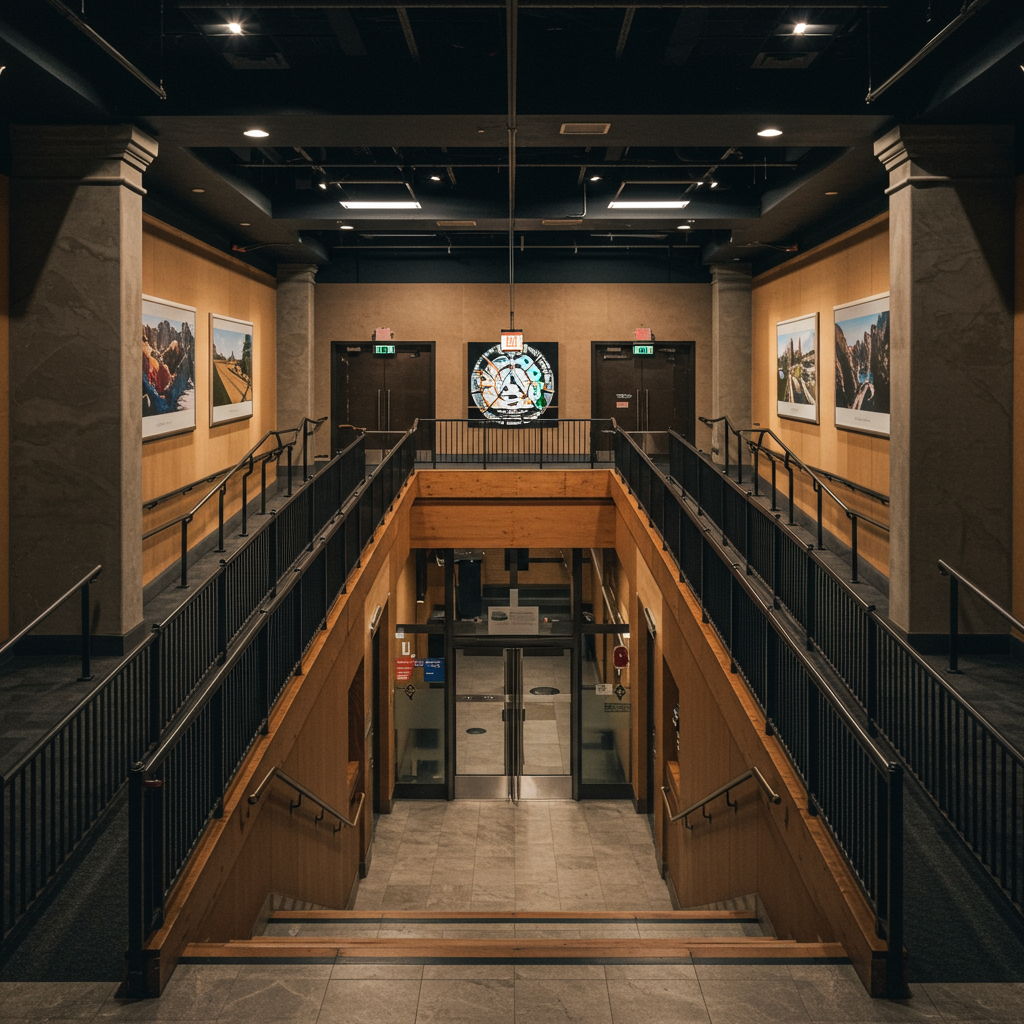
Your Ultimate Guide to Conference and Trade Show Venues in Saskatoon & Regina
This article provides a definitive framework for selecting, booking, and managing conference and trade show venues in Saskatoon and Regina. Aimed at corporate event planners, association managers, and marketing professionals, it offers a data-driven approach to maximizing event ROI. We delve into a portfolio of services, from initial venue scouting to post-event analysis, supported by measurable Key Performance Indicators (KPIs) such as cost per delegate, lead acquisition rate, and Net Promoter Score (NPS). Our proposal is to transform the venue selection process from a logistical challenge into a strategic advantage, ensuring that every event hosted in Saskatchewan’s key cities meets its objectives for engagement, branding, and financial return.
Introduction
Saskatoon and Regina, the economic and cultural hearts of Saskatchewan, are rapidly emerging as prime destinations for national and international events. Their strategic location in the Canadian Prairies, coupled with burgeoning sectors in technology, agriculture, and natural resources, creates a fertile ground for impactful gatherings. However, navigating the landscape of conference and trade show venues in Saskatoon and Regina requires more than a simple directory; it demands a strategic methodology. This guide provides that methodology, offering a comprehensive analysis of the factors that contribute to a successful event, from facility capabilities to attendee experience and budget optimization. We will explore how to leverage the unique character of these prairie cities to create memorable and effective conferences and trade shows.
Our approach is rooted in quantifiable results. We will break down the entire event lifecycle into measurable phases, each with its own set of KPIs. Success will be measured not just by flawless execution, but by tangible outcomes: a 15% increase in qualified leads, a Net Promoter Score (NPS) above 50, and a budget variance of less than 3%. This document serves as both a strategic blueprint and a practical toolkit for any organization looking to host an event in Saskatchewan, ensuring every decision is informed, every dollar is justified, and every objective is met.
Vision, values and proposal
Focus on results and measurement
Our vision is to position Saskatoon and Regina as top-tier destinations for business events by demystifying the venue selection and event management process. We operate on a core value of data-driven decision-making, applying the 80/20 principle to focus efforts on the 20% of activities that generate 80% of the results. This means prioritizing venue features that directly impact attendee engagement and ROI over purely aesthetic considerations. Our technical standards are aligned with industry best practices, including IACC (International Association of Conference Centres) guidelines for room design and acoustics, and sustainable event management principles (ISO 20121). Our proposition is simple: we provide a strategic partnership that transforms a location into a powerful platform for business growth.
- Strategic Value: We move beyond logistics to align venue choice with core business objectives, whether it’s market penetration, brand leadership, or internal team building.
- Financial Transparency: All recommendations are backed by a clear cost-benefit analysis, with projected ROI and total cost of ownership (TCO) for each option.
- Quality Criteria: Our venue scoring matrix evaluates over 50 data points, including technical infrastructure (Wi-Fi capacity, A/V quality), accessibility (AODA compliance), sustainability practices, and service quality (staff-to-delegate ratio).
- Decision Matrix: Clients receive a customized decision matrix that weighs criteria based on their specific priorities, providing a clear, objective recommendation for the ideal conference and trade show venues in Saskatoon or Regina.
Services, profiles and performance
Portfolio and professional profiles
We offer an end-to-end suite of services designed to streamline the planning and execution of events in Saskatchewan. Our team comprises seasoned professionals with specialized expertise, ensuring every facet of the event is managed to the highest standard. Our core services include:
- Venue Sourcing & Contract Negotiation: Leveraging our deep local knowledge and relationships to identify and secure the best conference and trade show venues in Saskatoon and Regina at preferential rates. Our negotiators aim for a 10-15% reduction on standard booking fees.
- Logistics & Operations Management: Handling all operational details, including floor plan design, supplier coordination (A/V, catering, security), and scheduling. Managed by Certified Meeting Professionals (CMP).
- Marketing & Delegate Acquisition: Developing and executing multi-channel marketing campaigns to drive registration and attendance. Led by digital marketing specialists with expertise in the MICE (Meetings, Incentives, Conferences, and Exhibitions) industry.
- On-Site Event Management: Providing a dedicated on-site team to oversee execution, manage contingencies, and act as a single point of contact for the client.
- Post-Event Analysis & Reporting: Compiling a detailed report with analysis of all key metrics, attendee feedback, and actionable recommendations for future events.
Operational process
- Discovery & Goal Setting (Week 1): In-depth consultation to understand objectives, budget, audience profile, and success metrics. KPI: Finalized Event Requirements Document (ERD).
- Venue Research & Shortlisting (Weeks 2-3): Comprehensive search and evaluation of suitable venues based on the ERD. KPI: Delivery of a shortlist of 3-5 qualified venues with comparative analysis.
- Site Inspections & Selection (Week 4): Coordinated site visits (virtual or in-person) and final venue selection. KPI: Signed venue contract with a 5% contingency clause.
- Pre-Event Planning & Production (Weeks 5-12): Detailed planning of all logistical and marketing elements. KPI: Project plan adherence with weekly progress reports; budget tracking within 2% variance.
- Event Execution (Event Days): Flawless on-site management. KPI: On-site issue resolution time of <30 minutes; >95% session start-time accuracy.
- Post-Event Wrap-up & Analysis (2 Weeks Post-Event): Financial reconciliation, feedback collection, and final reporting. KPI: Delivery of final report within 10 business days; NPS score of +50 or higher.
Tables and examples
| Objective | Indicators | Actions | Expected result |
|---|---|---|---|
| Maximize ROI | Cost Per Delegate, Revenue per Delegate, ROI (%) | Negotiate venue package with bundled A/V and catering. Secure tiered sponsorships. | Cost per delegate < $550 CAD. ROI > 150%. |
| Enhance Delegate Engagement | NPS, Session Attendance Rate, App Usage Rate | Implement event app with live polling and Q&A. Design interactive breakout sessions. | NPS > 55. Average session attendance > 85%. App adoption > 90%. |
| Generate Qualified Leads | Number of Leads (Exhibitors), Lead Quality Score | Deploy NFC or QR code-based lead capture technology. Host targeted networking events. | Average of 75 qualified leads per exhibitor. |
| Ensure Operational Excellence | Registration Wait Time, Catering Service Score | Use staggered registration times. Pre-print badges. Conduct catering tasting panels. | Peak registration wait time < 5 minutes. Catering satisfaction score > 4.5/5. |

Representation, campaigns and/or production
Professional development and management
Effective event production goes beyond securing a venue; it’s about creating a seamless and immersive experience. Our production management process is meticulous, covering every detail from regulatory compliance to contingency planning. We manage all necessary permits, including public gathering permits from the City of Saskatoon or Regina, liquor licensing through the Saskatchewan Liquor and Gaming Authority (SLGA), and compliance with local fire and safety codes. Our team coordinates a network of vetted local suppliers, from AV technicians and set designers to transportation providers and security personnel. The execution is mapped out on a master production schedule, shared with all stakeholders, detailing every cue and transition from the first day of load-in to the final truck leaving the site.
- Critical Documentation Checklist:
- Signed contracts for venue, AV, catering, and key suppliers.
- Certificates of Insurance (COI) from all vendors (minimum $2M liability).
- Floor plans approved by the venue and local fire marshal.
- Detailed Run of Show (ROS) document for all technical and stage staff.
- Emergency Action Plan (EAP) including evacuation routes and contact list.
- Supplier Stock and Alternatives: We maintain a database of backup suppliers for critical services. If a primary AV provider has an equipment failure, a pre-vetted alternative can be on-site within 90 minutes.
- Contingency plans:
- Weather (Winter): Contingency budget for snow removal at venue entrances; partnerships with local hotels for stranded delegates; backup travel plans for keynote speakers.
- Speaker Cancellation: A list of pre-qualified local industry experts who can step in on short notice. Virtual presentation capabilities as a standard backup.
- Technical Failure: On-site redundant systems for critical A/V (projectors, microphones); backup power generator for main session rooms.

Content and/or media that converts
Messages, formats and conversions: Marketing your Saskatoon & Regina Event
An exceptional venue is only effective if people attend. Our content strategy focuses on driving registrations and building anticipation. We craft compelling narratives around the event’s value proposition, using a mix of formats tailored to the target audience. The “hook” often centers on exclusive content or unique networking opportunities available only by attending. Calls to Action (CTAs) are clear and tested, such as “Register Now & Save 20%” or “Download the Exclusive Preview.” We conduct A/B testing on email subject lines, ad copy, and landing page layouts to optimize conversion rates, aiming for an email open rate of over 30% and a landing page conversion rate of over 5%. Selecting the right conference and trade show venues in Saskatoon or Regina becomes a key part of this marketing message, highlighting the quality and professionalism of the event.
- Content Strategy & Messaging (12 weeks out): Define core themes, key messages, and target audience personas. Responsible: Marketing Lead.
- Initial Asset Creation (10 weeks out): Develop event branding, website/landing page, and initial promotional video. Responsible: Creative Team.
- Email Campaign Launch (8 weeks out): Begin “early bird” registration push with a multi-part email sequence. Responsible: Email Marketing Specialist.
- Social Media & Paid Ads (7 weeks out): Launch paid campaigns on LinkedIn (for professional events) and other relevant platforms. Create engaging organic content (speaker spotlights, venue previews). Responsible: Social Media Manager.
- Content Marketing Push (6 weeks out): Publish blog posts, articles, and white papers related to the event’s theme to attract an organic audience. Responsible: Content Writer.
- Final Registration Drive (2-4 weeks out): Use urgency-based messaging (“Last chance,” “Seats are limited”) and testimonials from past attendees. Responsible: Marketing Lead.
- Pre-Event Engagement (1 week out): Send “Know Before You Go” emails, promote the event app, and encourage networking to build community. Responsible: Community Manager.

Training and employability
Demand-oriented catalogue
To ensure flawless on-site execution, we believe in empowering event staff—both our own and the client’s—with targeted training. This is particularly crucial for trade shows where booth staff are the front line of lead generation. Our training modules are practical, role-based, and designed to elevate performance.
- Module 1: The 30-Second Elevator Pitch: Training booth staff to engage attendees and qualify leads efficiently.
- Module 2: Mastering Lead Capture Technology: Hands-on training with the specific lead retrieval app or device being used at the event.
- Module 3: On-Site Customer Service Excellence: For registration and support staff, focusing on problem-solving, de-escalation, and creating a welcoming atmosphere.
- Module 4: Contingency & Emergency Protocols: Training for all staff on the Emergency Action Plan, ensuring a coordinated response to any situation.
- Module 5: A/V & Technical Support Basics: Basic troubleshooting for session moderators and support staff to handle common issues like microphone failures or presentation glitches before escalating.
Methodology
Our training methodology is based on interactive learning and real-world scenarios. We use a rubric-based evaluation system to assess competence after each module. For instance, staff in the Elevator Pitch module are scored on clarity, conciseness, and their ability to ask qualifying questions. We conduct practical exercises, such as mock trade show interactions and simulated emergency drills. For clients seeking to build their internal event capabilities, we offer a “train the trainer” program and can connect them with a pool of qualified, locally-based freelance event professionals in Saskatoon and Regina. The expected result is a highly competent, confident, and coordinated on-site team, leading to a smoother event and a measurable increase in performance metrics like leads captured per hour and positive attendee feedback scores.
Operational processes and quality standards
From request to execution
Our operational pipeline is a structured, transparent process designed for maximum efficiency and quality control. Each stage has clear deliverables and acceptance criteria, ensuring alignment with the client at every step.
- Diagnosis (Initial Inquiry): We receive a request and conduct a 60-minute discovery call to understand the “Five Ws” (Who, What, When, Where, Why) of the event. The deliverable is a formal Project Brief. Acceptance criteria: Client signs off on the brief.
- Proposal (1-2 Weeks): Based on the brief, we develop a detailed proposal including venue options, a preliminary budget, and a project timeline. Deliverable: Formal Proposal Document. Acceptance criteria: Client signs the Statement of Work (SOW).
- Pre-production (Planning Phase): The core planning phase where all logistical elements are locked in. Deliverables: Signed vendor contracts, approved floor plans, final marketing plan, detailed production schedule. Acceptance criteria: Weekly progress reports approved by the client; budget tracking shows <2% variance.
- Execution (Event Delivery): On-site management of the event. Deliverables: A flawlessly executed event experience. Acceptance criteria: Adherence to the Run of Show; positive real-time feedback from stakeholders.
- Closing (Post-Event): Financial reconciliation, data analysis, and reporting. Deliverable: A comprehensive Post-Event Report including budget summary, KPI analysis, and recommendations. Acceptance criteria: Final report delivered and reviewed with the client within 10 business days of the event’s conclusion.
Quality control
Quality is not an afterthought; it is embedded in every phase of our process. We use a system of checks and balances to maintain high standards and adhere to our Service Level Agreements (SLAs).
- Roles: Each project is assigned a dedicated Event Lead (client’s main point of contact), a Logistics Coordinator, and a Marketing Specialist. For large events, an on-site Technical Director is also assigned.
- Scaling: An issue escalation path is defined at the project’s outset. On-site issues are first handled by the on-site lead; if unresolved within 30 minutes, they are escalated to the Project Director.
- Acceptance Indicators: No vendor is contracted without meeting our minimum requirements (e.g., liability insurance, proven track record). No deliverable is presented to the client without internal peer review.
- SLAs: We commit to responding to client communications within 4 business hours. Critical reports and proposals are guaranteed to be delivered by the agreed-upon deadline.
| Phase | Deliverables | Control indicators | Risks and mitigation |
|---|---|---|---|
| Diagnosis | Project Brief | Client sign-off; brief contains all required data points. | Misunderstanding of objectives. Mitigation: Use of a structured questionnaire and playback of key points for confirmation. |
| Proposal | Venue shortlist, preliminary budget | Venue scores >80% on our matrix; budget includes a 10% contingency line. | Unrealistic budget expectations. Mitigation: Provide tiered options (good, better, best) with clear cost-benefit explanations. |
| Pre-production | Signed contracts, production schedule | All contracts reviewed by two team members; schedule has built-in buffer times. | Scope creep. Mitigation: Implement a formal change order process for any requests outside the original SOW. |
| Execution | Live event | Hourly check-ins with client; real-time monitoring of social media sentiment. | Technical failures. Mitigation: On-site technical support, redundant equipment, and pre-event tech rehearsals. |
| Closing | Post-Event Report | Data is cross-referenced from multiple sources (reg system, app analytics, surveys). | Inaccurate data. Mitigation: Data cleaning and validation process before final analysis is conducted. |
Cases and application scenarios
Case 1: “Agri-Innovate 2023” – Large-Scale Agricultural Tech Trade Show
Challenge: A national agricultural technology association needed to host its annual trade show for 2,500 delegates and 150 exhibitors. The event required a large exhibition hall (>10,000 m²), multiple breakout rooms for seminars, and robust infrastructure to support heavy machinery displays and high-bandwidth tech demos. The chosen location had to be in a major agricultural hub, making Regina an ideal candidate.
Solution: We identified the International Trade Center at the REAL District in Regina as the optimal venue. Its 14,000 m² of contiguous exhibition space and proximity to other facilities on the campus were perfect. We negotiated a multi-day package that included load-in/load-out days, security, and basic utilities, achieving a 12% cost saving compared to standard rates. A detailed logistics plan was created to manage the complex move-in of large farm equipment.
Execution & KPIs:
- Deadline: 9-month planning cycle.
- Budget: $1.2M CAD. Final cost was $1.18M (1.7% under budget).
- Attendance: Achieved 2,610 registered delegates, exceeding the target by 4.4%.
- Exhibitor Satisfaction: Exhibitor NPS was +62, with 95% reporting the lead quality as “good” or “excellent”.
- ROI: The association reported a 210% ROI based on sponsorship, ticket sales, and membership renewals attributed to the event.
Case 2: “Prairieland Connect” – Mid-Sized Corporate Sales Conference
Challenge: A national software company wanted to host its annual sales kickoff for 400 employees. The goal was a mix of intensive training, team-building, and an awards gala. They required a venue in Saskatoon with high-quality A/V, excellent catering, and an upscale feel to motivate their team for the year ahead.
Solution: We recommended TCU Place in downtown Saskatoon. Its Sid Buckwold Theater was perfect for the main sessions, offering professional-grade acoustics and lighting. A series of ballrooms provided flexible space for breakouts and the final gala. We worked with the venue’s exclusive caterer to design a custom menu that aligned with the event’s high-energy theme. We also organized a team-building activity along the Meewasin Valley trail, leveraging the venue’s prime location.
Execution & KPIs:
- Deadline: 6-month planning cycle.
- Budget: $350,000 CAD. Final cost was on budget.
- Employee Engagement: Post-event survey showed a 92% satisfaction rate. The event app recorded an average of 15 connections made per employee.
- NPS: The internal NPS for the event was +75, a 20-point increase from the previous year.
- ADR (Average Daily Rate): We negotiated a block of rooms at a nearby hotel for an ADR of $169, which was 15% below the market rate for that time of year.
Case 3: “Canadian Renewable Energy Symposium” – Niche Association Meeting
Challenge: A specialized academic and industry association with 150 members needed a venue for a three-day symposium focused on wind and solar energy. They had a tight budget and required a location that was both professional and conducive to intimate networking. The event was to be held in Saskatoon, a hub for renewable energy research.
Solution: We proposed the University of Saskatchewan campus. Using university facilities offered a significant cost advantage. We booked a modern lecture hall for plenary sessions and several smaller seminar rooms at the Marquis Hall for breakout discussions. This choice not only met the budget but also added academic prestige and provided easy access to university researchers for potential collaboration. Catering was handled by the university’s food services, further streamlining logistics and reducing costs.
Execution & KPIs:
- Deadline: 4-month planning cycle.
- Budget: $75,000 CAD. Final cost was $72,500 (3.3% under budget).
- Cost Per Delegate: The final cost per delegate was $483, which was 25% lower than their previous symposium held in a traditional conference center.
- Networking Value: 85% of attendees reported making at least three valuable new connections.
- Sustainability: The venue choice aligned with the event’s theme. The university’s sustainability practices helped the event achieve a 90% waste diversion rate.
Step-by-step guides and templates
Guide 1: The Ultimate Venue Selection Checklist for Saskatoon & Regina
Use this comprehensive checklist to evaluate potential conference and trade show venues in Saskatoon and Regina. Score each criterion from 1 (poor) to 5 (excellent).
- Location & Accessibility:
- Proximity to airport (YXE/YQR)?
- Accessibility via major highways?
- Availability of public transport?
- Sufficient on-site or nearby parking? (Cost?)
- Proximity to hotels, restaurants, and attractions?
- Compliance with accessibility standards (e.g., ramps, accessible restrooms)?
- Space & Capacity:
- Is the main hall large enough for your plenary session/exhibition? (Check m²)
- Are there enough breakout rooms of the required size?
- Is the room layout flexible (e.g., can it be set up in theatre, classroom, banquet style)?
- Is there adequate pre-function space for registration and networking?
- Are there dedicated spaces for speakers (green room) or staff (operations office)?
- Technology & A/V:
- Is Wi-Fi included? What is the bandwidth and capacity? (Can it handle all your delegates simultaneously?)
- Is there in-house A/V support? What are their costs?
- Are projectors, screens, microphones, and basic sound systems included in the room rental?
- Is there support for hybrid events (live streaming capabilities)?
- Is there adequate power supply for exhibitors and tech demos?
- Catering & Services:
- Is there an exclusive in-house caterer, or can you bring your own?
- Review menu options, quality, and pricing. Do they cater to dietary restrictions?
- Is there an on-site event manager or coordinator?
- What are the staffing levels (security, cleaning, technical)?
- Are tables, chairs, linens, and basic staging included in the price?
- Cost & Contract:
- What is the base rental fee? What exactly does it include?
- What are the costs for additional services (A/V, catering, security)?
- Is there a Food & Beverage (F&B) minimum spend?
- What is the deposit schedule and cancellation policy?
- Review the contract for hidden fees (e.g., service charges, landmark fees).
Guide 2: Trade Show Booth Success Template
A successful trade show presence requires meticulous planning. Follow these steps.
- Define Objectives (3 months out): What is your primary goal? (e.g., generate 100 qualified leads, book 20 product demos, increase brand awareness by 15%). Make it specific and measurable.
- Budgeting (3 months out): Allocate funds for: booth space, design & build, shipping, technology (lead capture, displays), marketing materials, staffing (travel, accommodation), and promotional items.
- Booth Design & Layout (2 months out): Design an open, inviting space. Ensure clear branding and messaging. Position interactive elements at the front to draw people in. Create a simple, logical flow.
- Pre-Show Marketing (1-2 months out): Announce your participation on social media and via email. Schedule meetings with key prospects and clients in advance. Offer a “show special” or incentive to visit your booth.
- Staffing & Training (1 month out): Select your most energetic and knowledgeable staff. Train them on the event’s objectives, your key messages, and how to use the lead capture system. Create a staff schedule to ensure the booth is always covered and staff remain fresh.
- Logistics (2-4 weeks out): Confirm shipping details for your booth and materials. Order on-site services like electricity, internet, and cleaning through the show organizer. Pack a “booth emergency kit” (tape, scissors, zip ties, cleaning supplies, first aid).
- Execution (Show Days): Arrive early. Greet attendees proactively. Scan every lead. Take detailed notes. After the show, thank your team.
- Post-Show Follow-up (Within 48 hours): Send a personalized follow-up email to every lead. Categorize leads by priority (hot, warm, cold) and assign them to the sales team for further action.
- Measure & Report (Within 2 weeks): Analyze your results against your initial objectives. Calculate your Cost Per Lead and ROI. Gather feedback from the team to improve for the next show.
Guide 3: Risk Assessment Matrix for Saskatchewan Events
Identify potential risks and plan mitigation strategies to ensure your event runs smoothly, regardless of unforeseen circumstances.
- Identify Risks: Brainstorm potential issues in categories: Logistical, Technical, Human, and External.
- Assess Probability & Impact: For each risk, rate its probability (Low, Medium, High) and its potential impact on the event (Low, Medium, High).
- Develop Mitigation & Contingency Plans:
- Mitigation: Steps to take beforehand to reduce the probability of the risk occurring.
- Contingency: A plan of action to follow if the risk does occur, to minimize its impact.
- Assign Ownership: Assign a team member to be responsible for monitoring each risk and executing the contingency plan if needed.
- Example Risk Assessment:
- Risk: Keynote speaker’s flight is cancelled due to a blizzard in Saskatoon (External).
- Probability: Medium (in winter). Impact: High.
- Mitigation Plan: Book the speaker to arrive a full day early. Purchase travel insurance.
- Contingency Plan: Have a high-quality video conferencing setup ready for a remote presentation. Have a vetted local expert on standby to fill the slot. Communicate transparently with attendees about the change.
- Owner: Speaker Liaison.
Internal and external resources (without links)
Internal resources
- Standard Venue Vetting Questionnaire
- Template for Request for Proposal (RFP) for Venues
- Post-Event Feedback Survey Template
- Master Event Budget Template (Excel)
- Production Schedule Template
External reference resources
- Events Industry Council (EIC) – Best Practices and Terminology
- Professional Convention Management Association (PCMA) – Industry Research and Education
- ISO 20121 – Event Sustainability Management Systems
- Saskatchewan Liquor and Gaming Authority (SLGA) – Special Occasion Permit Regulations
- City of Saskatoon & City of Regina – Bylaws on Public Gatherings and Noise
Frequently asked questions
What are the peak and off-peak seasons for booking venues in Saskatoon and Regina?
The peak season typically runs from May to October, coinciding with better weather and summer tourism. The off-peak season is generally from November to March. You can often secure more competitive rates and have greater date flexibility during the off-peak months, but you must have a solid contingency plan for winter weather.
How far in advance should I book a major conference venue in these cities?
For a large conference or trade show requiring significant space (over 1,000 delegates), it is advisable to book 18 to 24 months in advance. For mid-sized events (200-500 delegates), a lead time of 12 to 18 months is recommended. Smaller meetings may be booked within 6 to 12 months, but options will be more limited.
Are there union regulations I need to be aware of in Saskatchewan venues?
Some larger venues in Saskatoon and Regina may have collective agreements with unions (like IATSE for stagehands and technicians). This can affect labour costs for setup and teardown. It’s a critical question to ask during the venue evaluation process to ensure you budget accurately for labour. We always clarify these details during our contract negotiations.
What unique local experiences can I incorporate into my event in Saskatchewan?
In Saskatoon, consider experiences related to the South Saskatchewan River, such as a reception at the Remai Modern art gallery overlooking the water, or a group activity in the Meewasin Valley. In Regina, you can leverage Wascana Centre, one of North America’s largest urban parks, or organize a tour of the RCMP Heritage Centre. Incorporating local food producers, craft breweries, or Indigenous cultural experiences can also create a memorable event.
How do Saskatoon and Regina compare in terms of cost?
Generally, venue and accommodation costs in both cities are very competitive compared to larger Canadian centres like Toronto, Vancouver, or Calgary. Costs between Saskatoon and Regina are broadly similar, though specific venue pricing can vary. Regina, as the provincial capital, may have slightly higher demand (and thus prices) for events related to government and certain industries, while Saskatoon’s vibrant university and tech scene influences its market.
Conclusion and call to action
Choosing the right location is the cornerstone of a successful event. As we have demonstrated, the process of selecting from the diverse range of conference and trade show venues in Saskatoon and Regina should be a strategic, data-driven endeavor. By focusing on clear objectives, measuring performance with relevant KPIs, and implementing rigorous operational processes, event planners can mitigate risks and dramatically increase their return on investment. The venues in Saskatchewan’s two largest cities offer a compelling combination of modern facilities, professional service, and competitive value, making them an excellent choice for organizations of all sizes.
Do not leave your next event to chance. Elevate your conference or trade show from a logistical exercise to a strategic triumph. Contact us today to receive a customized analysis of venue options for your next event in Saskatoon or Regina and discover how our expert team can help you achieve your goals with precision and professionalism.
Glosario
- CMP (Certified Meeting Professional)
- A globally recognized credential for meeting and event planners, administered by the Events Industry Council.
- ERD (Event Requirements Document)
- A comprehensive document detailing all the client’s needs and objectives for an event, serving as a blueprint for the planning process.
- F&B Minimum
- A minimum amount of money that an event organizer is required to spend on food and beverages, as stipulated in the venue contract.
- NPS (Net Promoter Score)
- A metric used to measure attendee or client satisfaction, calculated based on the answer to a single question: “How likely is it that you would recommend this event to a friend or colleague?”
- RFP (Request for Proposal)
- A formal document that an organization sends to potential suppliers, like venues, to solicit bids for a project or event.
- Run of Show (ROS)
- A detailed, minute-by-minute schedule of an event, including all technical cues, speaker timings, and staff responsibilities.